How Much Does Residency or Citizenship Abroad Cost? Investment and Fees by Country [September 2026]


"How much does it cost to get permanent residence abroad?" There are two completely different answers to this question. The first is when you obtain it by investing: the cheapest option, Paraguay, starts at US$70,000; Caribbean citizenship costs around US$200,000; and Singapore's investor permanent residence requires S$10,000,000. The second is when you obtain it by living in the country for the required number of years; in that case, the fee you pay to the authorities is just €43.74 in Spain and €113 in Germany. In this article, we list investment amounts and application fees separately for 35 countries and territories, and summarise the programmes abolished or introduced between 2024 and 2026.
*Amounts and rules are as of 17 September 2026. This article is an English version of our Japanese guide, adapted for foreign residents of Japan and international investors.
*This article is a general explanation based on information published as of 17 September 2026 (official websites of governments and immigration authorities, official gazettes and legislation, and commentary by local law firms). This field changes very quickly, and we have even found cases where governments' own official websites still show outdated amounts. Amounts shown are, in principle, minimums (only the citizenship programme table also includes a "total" column covering government fees and due diligence fees). None of the amounts include professional fees or taxes. Always check eligibility and the actual total cost with the official information of the destination country and with a professional. For specific tax decisions, consult a tax accountant; for the interpretation of foreign law, consult a local lawyer. This article does not solicit any particular programme or investment product.
Contents
- Conclusion: the "cheapest route" for each goal
- Without investing: permanent residence application fees from under €50
- By investment: Asia and the Middle East
- By investment: Europe
- By investment: the Americas and Oceania
- Countries where you can buy citizenship (a passport): 7 countries
- Costs not included in the table amounts
- What changed in 2024–2026 (overview)
- How to choose by goal
- Frequently asked questions
- Summary
Conclusion: the "cheapest route" for each goal
First, the big picture. Depending on your goal, both the programme you should choose and the order of magnitude of the cost change completely.
| Goal | Country / programme | Minimum amount | What you get |
|---|---|---|---|
| Permanent residence as cheaply as possible | Paraguay (Investor Pass) | US$70,000 | Permanent residence (granted directly) |
| Acquire another citizenship, even if it means giving up Japanese nationality | Nauru (citizenship programme) | US$90,000 (discounted price until 31 December 2026) | Citizenship (Japanese nationals lose Japanese nationality) |
| Hold a status while continuing to live in Japan | UAE Golden Visa | AED 2,000,000 | 10-year residence visa |
| Live in the EU | Latvia (company investment) / Greece (Golden Visa) | €60,000 in total / €250,000 (change-of-use and heritage restoration category; purchasing a home in general areas requires €400,000) | 2-year / 5-year residence permit |
| Obtain it without investing | Spain (long-term residence permit) and others: live there for the required number of years | From €43.74 | Permanent residence of each country |
| Live there in retirement | Thailand retirement visa | Deposit of THB 800,000 | Permission to stay, one year at a time |
When reading the tables, note that the amounts in this article mix money of very different natures. Donations to citizenship programmes are not refunded. Real estate remains as an asset. Fixed deposits are returned at maturity. Thailand's LTR visa and Mexico's asset requirements are not expenditures at all, but proof that "you have this much income or assets". You cannot compare them on amount alone, so please also look at the right-hand columns of each table (status obtained, duration, notes).
Another point: "permanent residence", "long-term visa" and "citizenship" are completely different things.
- Permanent residence: the right to live in that country indefinitely (or for a long period). Your nationality does not change, and you keep your current passport
- Long-term visa: a status that must be renewed repeatedly. It lapses if you no longer meet the conditions. The UAE Golden Visa, Malaysia's MM2H and Thailand Privilege all fall into this category
- Citizenship (nationality): becoming a national of that country. For Japanese nationals, acquiring a foreign nationality by one's own choice results in the automatic loss of Japanese nationality (Article 11(1) of the Nationality Act). If you hold another nationality, check your own country's rules on dual nationality
Many programmes called "golden visas" are in fact long-term visas, not permanent residence. Compare them not by the programme's name but by what status you obtain and for how many years. We explain the differences in terminology in detail in The differences between permanent residence, citizenship, visas and tax residence.
Without investing: permanent residence application fees from under €50
If you obtain permanent residence by meeting the residence period without investing, the amount you pay to the authorities is very small. The table below shows the actual government fees for the ordinary route: living in the country as a student or worker, meeting the conditions and applying.
| Country | Breakdown of fees | Amount |
|---|---|---|
| Spain | Long-term residence permit €21.87 + foreigner identity card €21.87 | €43.74 |
| Germany | Settlement permit (Niederlassungserlaubnis) | €113 |
| South Korea | Change of status of residence to permanent residence (F-5) | KRW 200,000 |
| Singapore | Application fee 100 + entry permit 20 + re-entry permit 50 + identity card 50 | S$220 |
| Taiwan | Alien Permanent Resident Certificate (APRC) | NT$10,000 |
| France | Stamp duty for the 10-year card (carte de résident) | €350 *raised from €225 in May 2026 |
| Portugal | Processing €133 + issuance of the permanent residence permit €351.10 | €484.10 |
| Canada | Processing fee 990 + right of permanent residence fee 600 + biometrics 85 | C$1,675 |
| United States | Consular route (family petition I-130 + visa application DS-260 + affidavit of support I-864 + immigrant fee) | US$1,355 |
| United Kingdom | Indefinite Leave to Remain (ILR) | £3,226 |
| Australia | Skilled Independent visa (189) | A$6,135 |
| New Zealand | Skilled migrant residence visa (application fee + immigration levy) | NZ$6,450 *family members can be included in one application |
| Thailand | Application THB 7,600 + residence certificate THB 191,400 | THB 199,000 |
The broad trend is that continental Europe and East Asia charge modest fees, while the immigration systems of Commonwealth countries such as the UK, Australia, New Zealand and Canada charge considerably more. Singapore, where English is also an official language, charges only S$220, so the dividing line lies not in language but in system design. The exception to this trend is Thailand: because THB 191,400 is payable when permanent residence is granted, it stands out as by far the most expensive in this table. Between Spain, the cheapest at €43.74, and Thailand at THB 199,000, the difference is more than 100-fold.
However, there are three points to keep in mind when reading this table.
Point 1: whether the fee is "per person" or "per application" differs by country
New Zealand's fee is per application, and a spouse and children can be included in the same application. By contrast, the UK, Australia, the US and Canada charge for each accompanying family member (some countries reduce or waive fees for children). You cannot simply multiply by the number of people, so if you are applying as a family, calculate with the actual number and ages of family members. For example, because New Zealand allows family members in a single application, a family of four may pay less than in the UK or Canada. We explain the conditions for permanent residence in Canada and New Zealand in Canadian permanent residence: conditions and costs and New Zealand permanent residence: conditions and costs.
Point 2: do not add the UK Immigration Health Surcharge to the cost of ILR
The UK has an Immigration Health Surcharge (IHS), payable in advance at £1,035 per year. However, this is paid when obtaining a time-limited visa, and is not charged when applying for ILR (Indefinite Leave to Remain). Some explanations add "ILR + IHS" together, but this is wrong. The correct sequence is: "pay a total of £5,175 in IHS over the five years leading up to ILR, then pay £3,226 for ILR at the end".
Point 3: 2026 was a year of concentrated fee revisions
Canada (30 April), the UK (8 April), France (1 May), Portugal (1 March) and Australia (1 July): five countries revised their fees in 2026 alone. France went from €225 to €350, an increase of more than 50%. Large numbers of pre-revision figures remain online, so please check the official fee schedule before applying.
By investment: Asia and the Middle East
From here on, we look at investment routes, starting with Asia and the Middle East.
| Country / programme | Minimum amount | Status obtained | Duration |
|---|---|---|---|
| Malaysia MM2H (SEZ/SFZ category = special economic zones such as Johor; age 50+) | Fixed deposit of US$32,000 | Long-term visa | 10 years |
| Malaysia MM2H (Silver) | Fixed deposit of US$150,000 | Long-term visa | 5 years |
| Malaysia MM2H (Platinum) | Fixed deposit of US$1,000,000 | Long-term visa | 20 years |
| Thailand Privilege (Bronze) | THB 650,000 | Long-term visa | 5 years |
| Thailand LTR visa | Annual income of US$80,000, etc. | Long-term visa | 10 years |
| UAE Golden Visa | Real estate of AED 2,000,000 | Residence visa | 10 years (renewable) |
| Indonesia Second Home | Deposit equivalent to US$130,000 | Long-term visa | 5–10 years |
| Hong Kong New Capital Investment Entrant Scheme | HK$30,000,000 | Visa to stay | Permanent residence requires a separate 7 years of residence |
| Singapore GIP (Global Investor Programme) | S$10,000,000 | Permanent residence | 5-year re-entry permit |
In this table, only Singapore grants permanent residence directly. All the others are long-term visas that lapse if you no longer meet the conditions.
"Permanent residence for HK$30 million" in Hong Kong is incorrect
Under Hong Kong's New Capital Investment Entrant Scheme, investing HK$30,000,000 gives you only a visa to stay. Permanent residence (right of abode) separately requires 7 continuous years of ordinary residence. In addition, there are detailed restrictions on counting real estate: real estate as a whole is capped at HK$15,000,000, of which residential property is capped at HK$10,000,000, and residential property is not counted at all unless the transaction price per property is HK$30,000,000 or more. Moreover, this HK$30 million threshold applies only to residential property whose purchase was completed on or after 17 September 2025. Residential property completed before that date still requires HK$50,000,000 or more per property, as before.
The "AED 100,000 lifetime Golden Visa" in the UAE has been denied by the authorities
From around July 2025, claims spread, mainly on social media, that "a lifetime UAE Golden Visa can be obtained for AED 100,000". However, the UAE Federal Authority for Identity, Citizenship, Customs and Port Security (ICP) categorically denied on 9 July 2025 that any such programme exists, and in January 2026 it again warned that such claims have "no legal basis".
Also, the UAE Golden Visa is not permanent residence but a renewable residence visa. It lapses if you sell the property. In addition, due to the military tensions with Iran from February to May 2026, Dubai property prices have fallen by about 10% since the end of February, so please take this into account if you choose the real estate route (details below). We explain the conditions and costs in Dubai Golden Visa: conditions and costs.
For Malaysia and Thailand, we summarise the conditions for each category and actual living costs in Malaysia MM2H: conditions and costs, Moving to Malaysia: conditions and costs and Moving to Thailand: conditions and costs.
For Singapore, Moving to Singapore and the conditions for permanent residence (PR) covers the conditions for investor permanent residence (GIP), the procedure for applying for permanent residence from a work pass, and the obligations after obtaining permanent residence.
By investment: Europe
Since 2025, the EU has rapidly tightened regulation of investment migration. Please look separately at what is still available and what has been abolished.
| Country / programme | Minimum amount | Status obtained | Duration |
|---|---|---|---|
| Greece Golden Visa | €250,000 (change of use / heritage restoration) / €400,000 (general areas) / €800,000 (Athens, etc.) | Residence permit | 5 years (renewable) |
| Portugal Golden Visa | Cultural support €250,000 / fund €500,000 | Residence permit | Permanent residence after 5 years, citizenship after 10 years (*if the required number of days of stay is met) |
| Hungary Guest Investor | Approved fund €250,000 | Residence permit | 10 years (renewable once) |
| Italy Investor Visa | Start-up €250,000 / existing company €500,000 | Residence permit | 2 years, then renewal |
| Cyprus permanent residence | €300,000 (excluding VAT) | Permanent residence | Permanent (maintained by entering once every 2 years) |
| Malta MPRP (Malta Permanent Residence Programme) | Minimum total of €169,000 (government-related €99,000 + annual rent of €14,000 × 5 years). If you buy a property instead of renting, €375,000 or more is required in place of the rent, for a total of €474,000 | Permanent residence | Permanent (property held for 5 years) |
| Latvia company investment | Capital contribution of €50,000 for a small company, or €100,000 for a large company. In both cases a €10,000 payment to the state budget is added, for a minimum total of €60,000 | Temporary residence permit | 2 years (shortened from 5 years in September 2026) |
| Country / programme | Details | Date |
|---|---|---|
| Spain Golden Visa | Abolished entirely, including the €500,000 real estate route | 3 April 2025 |
| Malta citizenship (MEIN = Malta Exceptional Investor Naturalisation) | The Court of Justice of the EU ruled it in breach of EU law, and Malta abolished the programme | July 2025 |
| Latvia real estate and deposit routes | Real estate €250,000 and subordinated deposit €280,000 routes abolished | 15 September 2026 |
| Hungary direct real estate purchase | €500,000 route abolished | 15 January 2025 |
| Portugal real estate routes | Real estate €500,000 / renovation €350,000 abolished | October 2023 |
| Ireland investor programme | €1,000,000 programme suspended | February 2023 |
As a result, as of September 2026, there is no longer any programme with a published price that grants EU citizenship. Malta's MEIN was the last one, but it was abolished following the April 2025 judgment of the Court of Justice of the EU (Austria grants nationality at its discretion for extraordinary merit, but this is not a programme with a published price). Malta's MPRP remains, but it is permanent residence, not citizenship; it allows only short stays in the Schengen Area and no right to work in other EU member states.
Latvia's main routes disappeared on 15 September 2026
Many online articles still present Latvia as "a country where you can get EU residence with €250,000 in real estate". However, this route was abolished by the new Immigration Law that took effect on 15 September 2026. Under the remaining company investment route (for a small company, a capital contribution of €50,000 + a €10,000 state budget payment = €60,000 in total), the residence permit has also been shortened from 5 years to 2 years. A €150,000 fund route was introduced as an alternative, but local experts point out that suitable funds to receive the investment have not yet been sufficiently established.
Portuguese citizenship now takes 10 years instead of 5
For applications filed on or after 19 May 2026, Japanese nationals need 10 years of residence to obtain Portuguese citizenship (7 years for nationals of EU and Portuguese-speaking countries). In addition, the starting date changed from "the application date" to "the date the first residence card was issued", so time spent waiting for the immigration authority's decision does not count. Explanations saying "citizenship in 5 years" are out of date for applications filed on or after 19 May 2026. Note that permanent residence remains at 5 years.
Details for each country are in Moving to Portugal: visa types and conditions and Moving to Greece: visa types and conditions for permanent residence. For how these programmes work, see What is a golden visa?.
By investment: the Americas and Oceania
The Americas and Oceania are the region with the widest range of investment amounts in this article. From Paraguay's US$70,000 to New Zealand's NZ$5,000,000, the difference is roughly 41-fold when converted to a common currency (about 82-fold compared with New Zealand's Balanced category of NZ$10,000,000).
| Country / programme | Minimum amount | Status obtained | Notes |
|---|---|---|---|
| Paraguay Investor Pass | Productive investment US$70,000 / tourism US$150,000 / real estate and financial products US$200,000 | Permanent residence (granted directly) | Introduced in April 2026. The productive investment category requires the creation of 5 permanent jobs. The real estate category is limited to economic-activity purposes; property for the applicant's or family's own residence does not qualify |
| Panama Friendly Nations | Real estate or fixed deposit of US$200,000 | 2 years of temporary residence → permanent residence | Japan is among the eligible countries |
| Panama Qualified Investor Visa | New-build / first-sale real estate of US$300,000 | Permanent residence (granted directly) | US$500,000 for securities; US$750,000 for a fixed deposit (US$500,000 at a state-owned bank). US$500,000 for resale real estate (Executive Decree No. 17 of September 2026) |
| Mexico permanent residence | Assets equivalent to US$298,000, or a monthly income threshold | Permanent residence | Linked to the peso-based inflation-indexed unit (UMA) and changes every year. The US dollar equivalent differs by consulate |
| Palau Elite Resident | Purchase or lease of a residence worth US$250,000 + fees of US$20,000 | 10-year visa to stay | Not a programme for obtaining permanent residence by investment. Capped at 1,000 people |
| United States EB-5 | US$800,000 (targeted areas) / US$1,050,000 | Conditional permanent residence → permanent residence | Scheduled to be adjusted for inflation on 1 January 2027 (amount not yet published) |
| United States Gold Card | US$1,000,000 + fee of US$15,000* | Permanent residence (EB-1/EB-2 categories) | Created in September 2025. As of May 2026, 1 approval. *The fee is an operational amount, not set by the executive order |
| Canada Quebec Investor Program | Investment of C$1,000,000 + contribution of C$200,000 | Permanent residence (provincial selection → federal application) | Requires net assets of C$2,000,000 or more |
| New Zealand AIP (Active Investor Plus) | Growth category NZ$5,000,000 / Balanced category NZ$10,000,000 | Residence visa → permanent resident visa | Restructured into two categories in April 2025. Investment holding period: 3 years (Growth) / 5 years (Balanced) |
Describing the US "Gold Card" as US$5 million is incorrect
Initial reports in February 2025 cited "US$5 million", but the amounts in Executive Order 14351 (signed 19 September 2025), which was actually issued, are US$1,000,000 for an individual / US$2,000,000 where a corporation donates on behalf of an individual. The executive order itself does not set a fee amount; in practice, a separate processing fee of US$15,000 is said to apply. US$5,000,000 is the anticipated amount for the "Platinum Card", which has not yet launched, and the official website itself notes that there is no guarantee this amount will remain unchanged.
More importantly, this is not a new visa category but a mechanism that uses the existing EB-1/EB-2 categories. Its track record, as of May 2026, was just 1 approval out of 338 applications, so it can hardly be said to be functioning as a programme. It has also been reported that an association of university faculty has filed a lawsuit.
If you want to compare routes to US permanent residence, How much does US permanent residence (a green card) cost? explains the costs of each route in detail: EB-5, the lottery, family and employment. Note that the EB-5 amount of US$800,000 applies only for 2026, and is scheduled to be adjusted automatically for inflation on 1 January 2027 (in the past, a similar adjustment was delayed by litigation). As of September 2026, the new amount has not yet been published.
Australia's investor migration has ended, while Canada is moving the other way
Australia's 188 visa (investor migration) was permanently closed on 31 July 2024. Its successor, the National Innovation visa (858), has no investment amount requirement at all and is invitation-only. So as of 2026, the question "how much is Australia's investor migration?" no longer makes sense (a refund procedure is available for existing 188 visa applicants). We compare the routes to permanent residence currently available, such as skilled migration, employer sponsorship and family visas, in Moving to Australia and the conditions for permanent residence.
Conversely, Canada's Quebec Investor Program, often described in Japanese-language sources as "suspended", is accepting applications as of September 2026 (the official website explicitly states "applications may be submitted at any time" and "no cap on the number of applications"). What has stopped is the Start-up Visa, which closed to new applications on 31 December 2025.
Countries where you can buy citizenship (a passport): 7 countries
These programmes let you acquire nationality itself in exchange for a donation or investment. For Japanese nationals, however, the following point is decisive.
For Japanese nationals: Japanese nationality is lost automatically. Under Article 11(1) of the Nationality Act, a Japanese national loses Japanese nationality at the moment they acquire a foreign nationality by their own choice. In addition, a notification of loss of nationality must be filed within 1 month of learning of the fact (within 3 months if the person is abroad on that date) (Article 103 of the Family Register Act), and once Japanese nationality is lost, the Japanese passport becomes invalid and must be returned. Therefore, expressions such as "second passport" or "dual citizenship" do not apply to Japanese nationals who acquire foreign nationality through investment or donation (the situation is different for those who hold multiple nationalities not by their own choice, such as dual nationality by birth). If you hold a nationality other than Japanese, check your own country's rules.
| Country | Minimum donation (single applicant) | Total including other fees (single applicant) | Processing time |
|---|---|---|---|
| Nauru | US$90,000 (discounted price until 31 December 2026; regular price US$115,000) | About US$102,700 | 3–4 months (official estimate; actual results not published) |
| Vanuatu | US$130,000 | About US$135,000 | Not published |
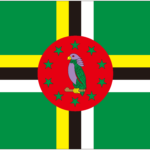
| Dominica | US$200,000 | About US$210,000 | Average 9.3 months |
| Antigua and Barbuda | US$230,000 | About US$248,800 | Average 14.2 months |
| Grenada | US$235,000 | About US$243,000 | Average 7 months |
| Saint Lucia | US$240,000 | About US$250,000 | Average 18 months |
| Saint Kitts and Nevis | US$250,000 | US$260,000 | Average 5.1 months |
*Vanuatu amended its citizenship programme regulations in March 2026, but because the exact contribution amount after the amendment has not been published, the amount in the table is based on the official fee schedule before the amendment. Processing times have not been published either. Always confirm with the local citizenship office before applying.
The five Caribbean countries agreed to set the donation at US$200,000 or more from 1 July 2024, but this is only a floor, not a uniform price. Actual minimums range from Dominica's US$200,000 to Saint Kitts's US$250,000, and once government fees, due diligence fees and interview fees are added, the total runs a few percent to about 10% above the minimum (roughly 3–8% for the five Caribbean countries, about 14% for Nauru).
2026 was the year "passport value" fell
The figure that goes out of date fastest in this field is "visa-free access to XX countries". Since 2023, visa exemptions have been lost as follows.
- Vanuatu: in December 2024, the EU decided on the permanent abolition of the visa exemption, applied from 3 February 2025 (Regulation (EU) 2025/11). As of 2026, a visa is required for the Schengen Area
- Saint Lucia: the UK withdrew the exemption on 5 March 2026
- Saint Kitts and Nevis and Saint Lucia: Ireland withdrew the exemption on 15 June 2026
- Nauru: the UK withdrew the exemption on 9 December 2025
- Dominica: the UK withdrew the exemption in July 2023
Furthermore, in a letter dated 25 June 2026, the EU demanded that the five Caribbean countries "phase out their citizenship programmes by 1 June 2028", and the next assessment will take place in December 2026. As of September 2026, all five countries retain Schengen visa-free access, but you should understand that the situation is likely to change over the next two years.
Under a US presidential proclamation of 16 December 2025, the issuance of immigrant visas, tourist visas and other visas to nationals of Antigua and Barbuda and Dominica has been suspended since 1 January 2026. Grenada, Saint Kitts, Saint Lucia, Vanuatu and Nauru are not affected.
It is also often said that "obtaining Grenadian citizenship lets you use the US E-2 visa", but under the 2022 National Defense Authorization Act, a person who acquired a treaty country's citizenship through investment must have resided in that country continuously for 3 years before applying for E-2. It is true that Grenada is an E-2 treaty country, but explanations directly linking citizenship acquisition to E-2 no longer hold.
We explain Dominican citizenship in detail in Dominica citizenship. Vanuatu also offers, separately from citizenship, a permanent residence visa that can be obtained without changing nationality, which we cover in Vanuatu permanent residence visa. For the status of residence after losing Japanese nationality, see Status of residence after losing Japanese nationality.
Costs not included in the table amounts
The amounts in the tables are only minimum investment amounts. The total actually required differs by the following items.
| Item | Details |
|---|---|
| Government fees and application fees | From tens of thousands of yen to several million yen depending on the country. For Portugal's Golden Visa, the issuance fee alone is in the range of several hundred thousand yen per person |
| Due diligence fees | For citizenship programmes, US$5,000–10,000 for the principal applicant, plus fees for each family member |
| Property acquisition costs | Stamp duty, registration fees and agency commission: 5–10% of the property price depending on the country |
| Professional fees | Fees for local lawyers and agents. These can amount to several million yen in addition to the investment |
| Document preparation costs | Obtaining criminal record certificates, family register (koseki) certificates for Japanese nationals and bank balance certificates, plus apostilles and translations |
| Maintenance costs | Renewal fees, property holding taxes and management fees, health insurance. Incurred every year |
| Taxes | If you move and become a tax resident, you become subject to that country's taxation |
Items that are particularly easy to overlook are maintenance costs and taxes. In Thailand and Malaysia, for example, staying beyond a certain number of days makes you a tax resident of that country, which changes how foreign income is treated. On the Japanese side, a person who lived in Japan for more than 5 of the 10 years before departure and becomes a non-resident while holding covered assets (such as securities and unsettled derivatives) worth JPY 100 million or more may be subject to the exit tax, which taxes unrealised gains (a tax deferral system is also available). We cover this in Taxes and resident registration procedures when moving abroad.
As for documents, documents issued in Japan require an apostille (certification by the Ministry of Foreign Affairs) or consular legalisation, depending on the destination country, plus translation. Our office handles obtaining apostilles, translations and certifications (in Japanese) and ordering family register (koseki) certificates from overseas (in Japanese).
The eighth hidden cost: the risk of the country itself
The biggest variable not shown in any table is the risk carried by the country itself. In 2026, that risk became reality. When the United States and Israel began strikes on Iran on 28 February, Iran began retaliatory attacks on the UAE. Reported damage includes the Shah gas field on 16 March, an aluminium smelter at Khalifa Port on 28 March, the Ruwais refinery and Khor Fakkan port on 5 April, and the Habshan gas processing facility in early April. In Dubai, DP World also suspended operations at Jebel Ali port as a precaution. Iran and the United States agreed a ceasefire on 8 April, but on 4 May the Fujairah oil industry zone was hit by a drone attack that caused a fire, and tensions have persisted after the ceasefire.
The impact on property prices was not a "crash", but large enough that it cannot be ignored. Dubai residential prices fell by about 10% cumulatively from the end of February, and Q2 2026 was down 4% quarter on quarter. However, the monthly decline narrowed from 6% in March to 1% in May–June. And on a year-on-year basis, villas were up 2% and apartments down 3%, which gives a different picture. The reality is not that the market as a whole collapsed, but that it swung sharply over a short period.
A programme that grants residence status in exchange for a property investment means taking on that country's property market and geopolitical risks as they are. On the other hand, with a status that can be maintained by visiting once every few years, like the UAE Golden Visa, you can choose to stay in Japan during a crisis. Conversely, the heavier a programme's minimum-stay obligations, the narrower your options in a crisis. Do not choose a country on the low investment amount alone; also consider "whether you can hold that status without living in that country".
What changed in 2024–2026 (overview)
This field has been transformed over the past three years. If you proceed on the basis of outdated information, you may spend time on programmes that no longer exist.
| Date | Country | Details |
|---|---|---|
| 31 July 2024 | Australia | Investor migration (188 visa) permanently closed |
| December 2024 | Vanuatu | EU decides on permanent abolition of Schengen visa-free access (applied from 3 February 2025) |
| 15 January 2025 | Hungary | Direct real estate purchase route abolished |
| 1 April 2025 | New Zealand | Investor visa revised. Lowered from NZ$15,000,000 to NZ$5,000,000, and the English requirement removed |
| 3 April 2025 | Spain | Golden Visa abolished |
| July 2025 | Malta | Citizenship programme (MEIN) abolished (following the Court of Justice of the EU judgment) |
| 19 September 2025 | United States | Gold Card created (US$1,000,000 for an individual) |
| 9 December 2025 | Nauru | UK withdraws visa exemption |
| 31 December 2025 | Canada | Start-up Visa closed to new applications |
| 1 January 2026 | United States | Visa issuance suspended for nationals of Antigua and Dominica |
| 5 March 2026 | Saint Lucia | UK withdraws visa exemption |
| April 2026 | Paraguay | Investor Pass introduced (permanent residence granted directly from US$70,000) |
| 19 May 2026 | Portugal | Citizenship requirement extended from 5 to 10 years (for Japanese nationals) |
| 25 June 2026 | EU → five Caribbean countries | Demands abolition of citizenship programmes by 1 June 2028 |
| 15 September 2026 | Latvia | Real estate and deposit routes abolished; company investment residence permit shortened from 5 to 2 years |
To sum up the table: there were 6 abolitions or suspensions of investment migration or citizenship programmes themselves (Australia, Hungary, Spain, Malta, Canada, Latvia) and 3 introductions or relaxations (United States, Paraguay, New Zealand). Of the remaining 6, 4 were withdrawals of visa exemptions or entry restrictions, 1 was a tightening of citizenship requirements and 1 was the EU's demand for abolition addressed to the five Caribbean countries (15 rows in total). While Europe is tightening regulation, some countries such as Paraguay are expanding access, so the trend is not uniform. When you start considering your options, the reliable approach is to first confirm "whether the programme still exists".
How to choose by goal
Here we rearrange the lists above in the order you would actually decide: what are you getting it for?
You want to hold a foreign status while continuing to live in Japan
Choose a programme that can be maintained without leaving Japan (with very light minimum-stay obligations). The leading examples are the UAE Golden Visa (AED 2,000,000) and the Greek Golden Visa (€250,000 in the change-of-use / heritage restoration category, or from €400,000 to buy a home in general areas). However, neither is permanent residence; both are renewable and lapse if you dispose of the investment. In addition, how the years count towards citizenship differs from programme to programme (see below).
You want to keep costs to a minimum
Paraguay's Investor Pass (US$70,000) is the cheapest permanent residence as of 2026. However, the productive investment category requires the creation of 5 permanent jobs; simply depositing money is not enough. The tourism investment category is US$150,000 and the real estate and financial products category is US$200,000. Note that the real estate category is limited to economic-activity purposes; property for the applicant's or family's own residence does not qualify. Keep in mind that the official language is Spanish and that it is a long way from Japan.
You eventually want that country's citizenship too
Actually living there is a prerequisite. Portugal requires 10 years, Greece 7 years, and Thailand a further 5 years after obtaining permanent residence. Note here that the treatment of "years you did not live there" differs by programme. With Portugal's Golden Visa, years of residence accumulate even with stays of around 7–14 days a year, but the amendment of 19 May 2026 changed the starting date to the issue date of the residence card. In Greece, by contrast, where actual residence is assessed, years in which you do not travel there are not counted. The UAE Golden Visa has no ordinary route to naturalisation at all. For Japanese nationals, long-term planning is needed, including the fact that acquiring citizenship means losing Japanese nationality.
You want to retire to a country with a lower cost of living
Retirement visas, rather than investment-based programmes, are suitable. Thailand requires age 50+ and a deposit of THB 800,000; Malaysia's MM2H in the Johor category requires age 50+ and a deposit of US$32,000. Neither is permanent residence, but the cost is an order of magnitude lower than investment migration.
Frequently asked questions
How much does permanent residence abroad cost?
If you obtain it by investing, the cheapest is Paraguay at US$70,000. Caribbean citizenship costs around US$200,000. For EU golden visas, Greece's guideline amounts are €250,000 in the change-of-use / heritage restoration category, €400,000 for buying a home in general areas, and €800,000 in major areas such as Athens and Thessaloniki. On the other hand, if you live in the country as a student or worker and obtain it after meeting the required years, application fees start from under €50: €43.74 in Spain, €113 in Germany and S$220 in Singapore.
Which country makes permanent residence easiest to obtain?
If you are obtaining it with money: Paraguay (permanent residence granted directly for US$70,000) and Panama's Qualified Investor Visa (permanent residence granted directly for new-build / first-sale real estate of US$300,000). Both grant permanent residence without a temporary residence stage (Panama also has the cheaper US$200,000 Friendly Nations route, but it involves 2 years of temporary residence). However, "easy to obtain" and "easy to maintain" are different questions. Please also check minimum-stay obligations and renewal conditions. We compare each country's conditions, required years and ease of maintenance in Countries where Japanese nationals can obtain permanent residence most easily.
What is the difference between permanent residence and citizenship?
Permanent residence is the right to live in a country; citizenship means becoming a national of that country. With permanent residence you keep your current nationality, but for Japanese nationals, acquiring citizenship results in the automatic loss of Japanese nationality (Article 11(1) of the Nationality Act). Some explanations present citizenship programmes as a "second passport", but this does not apply to Japanese nationals who acquire a foreign nationality by their own choice.
Is a golden visa permanent residence?
It depends on the programme. The golden visas of Portugal, Greece and the UAE are not permanent residence but (renewable) residence permits. By contrast, Malta's MPRP (Malta Permanent Residence Programme) and Cyprus's programme grant permanent residence. Judge not by the name but by the duration and the type of status.
Which countries sell citizenship?
As of September 2026, seven countries: Nauru, Vanuatu, Dominica, Antigua and Barbuda, Grenada, Saint Lucia, and Saint Kitts and Nevis. The cheapest is Nauru at US$90,000 (discounted price until 31 December 2026). With the abolition of Malta's MEIN in July 2025, there is no longer any citizenship programme with a published price in an EU member state (Austria grants nationality at its discretion for extraordinary merit, but this is not a programme with a published price).
Is it enough to prepare the amount shown in the table?
No. Government fees, due diligence fees, property acquisition costs, professional fees, apostilles and translations of documents, and annual maintenance costs are all additional. For citizenship programmes, the total typically runs a few percent to about 10% above the minimum; for investment migration, it is not unusual for the total to exceed the minimum by several million yen once professional fees are included.
How often does the information change?
This field changes very quickly. In 2025 alone, Spain's Golden Visa and Malta's citizenship programme were abolished; in 2026, Latvia's main routes disappeared and Paraguay introduced a new programme. In addition, we have found cases where governments' own official websites still show outdated amounts (confirmed for Grenada and Saint Lucia). When you begin considering an application, please check the latest primary sources.
Summary
The cost of permanent residence abroad ranges, depending on how you obtain it, from under €50 to S$10 million. By investment, the cheapest is Paraguay at US$70,000; by residence, the cheapest application fee is Spain's €43.74. Citizenship starts from Nauru's US$90,000 (discounted price until 31 December 2026; regular price US$115,000). However, for Japanese nationals, acquiring citizenship by investment is an acquisition of foreign nationality by one's own choice and results in the loss of Japanese nationality, a price that cannot be measured in money.
2024–2026 were three years of major change in this field. Spain abolished its Golden Visa, Malta its citizenship programme, and Latvia closed its main real estate and deposit routes. Australia ended investor migration, and Canada stopped its Start-up Visa. Meanwhile, the United States created the Gold Card and Paraguay the Investor Pass. In the first half of 2026, the UAE was also affected by military tensions, and property prices fell. Both the programmes and the situation in the destination countries keep moving. It is safer to assume that information from a few years ago can no longer be used.
Detailed conditions and costs for each country are covered in our country articles.
- How much does US permanent residence (a green card) cost?
- Moving to Portugal: visa types and conditions
- Moving to Greece: visa types and conditions for permanent residence
- Dubai Golden Visa: conditions and costs
- Malaysia MM2H: conditions and costs
- Moving to Thailand: conditions and costs
- What is a golden visa? How it works, country comparison and cautions
- Moving to Hong Kong: conditions and costs
- Moving to Vanuatu: safety, cost of living, taxes and visas
Our office provides comparison consultations on permanent residence, citizenship and relocation visas in each country, as well as apostilles, translations and family register (koseki) retrieval for the Japanese documents needed for applications. If you would like to work out "which countries fit my budget" or "what the total cost would be for my whole family", please use our free consultation. We never use pushy sales tactics. As Certified Administrative Scriveners, we are bound by a legal duty of confidentiality. We can assist in English and Japanese.
- Free consultation form
- Phone: +81-3-6303-1664 (weekdays 9:00–20:00 Japan time)
- Email: info@royal-ptns.com
- Our services and consultation process
References (primary sources)
- National Tax Agency, Tax Answer No. 1478: Exit tax system
- Embassy of Japan in the United States: Notification of loss / renunciation of Japanese nationality
- COBALT (Baltic law firm): Commentary on Latvia's new Immigration Law (effective 15 September 2026)
- Fragomen: Relaxation of New Zealand's investor visa (effective 1 April 2025)
- Greek National Registry of Administrative Procedures (mitos.gov.gr): New issuance of change-of-use golden visas
- Al Jazeera: Missile and drone attacks on the UAE (4 May 2026, the first since the ceasefire)
- Insurance Journal: List of damage to Gulf energy facilities (7 April 2026)
- Khaleej Times: Quarterly report on the Dubai property market (21 July 2026)
- Global Property Guide: UAE residential property market analysis 2026
- US Citizenship and Immigration Services (USCIS): EB-5 investor program investment amounts
- Federal Register: Executive Order 14351 "The Gold Card" (published 24 September 2025)
- eCFR 8 CFR 106.2: USCIS fee schedule
- Immigration, Refugees and Citizenship Canada (IRCC): Fee list
- Government of Quebec: Conditions for immigrating as an investor
- Australian Department of Home Affairs: Closure of the Business Innovation and Investment Program (BIIP)
- Immigration New Zealand: Active Investor Plus visa
- Singapore Economic Development Board (EDB): Global Investor Programme
- Government of the Hong Kong SAR: Investment requirements of the New Capital Investment Entrant Scheme
- Malaysian Ministry of Tourism, Arts and Culture: MM2H categories
- UAE Government Portal: Golden Visa
- Gulf News: UAE authorities deny the "AED 100,000 lifetime Golden Visa"
- OECS: Agreement on Caribbean citizenship programmes (minimum US$200,000)
- Antigua and Barbuda Citizenship by Investment Unit: Fee schedule
- Dominica Citizenship by Investment Unit: Economic Diversification Fund
- Saint Kitts and Nevis Citizenship by Investment Unit: Sustainable Island State Contribution
- Government of Nauru: Contribution amounts for the Economic and Climate Resilience Citizenship Program
- Vanuatu Citizenship Office: Fee schedule
- Council of the EU: End of visa exemption for Vanuatu (12 December 2024)
- European Commission: Eighth report under the visa suspension mechanism
- KPMG: Abolition of Spain's Golden Visa (Organic Law 1/2025)
- ASIL: CJEU judgment C-181/23 and Malta's citizenship programme
- Clark Hill: Amendment of Portugal's Nationality Law (2026)
- Paraguay Ministry of Industry and Commerce: Creation of the Paraguay Investor Pass
- Palau Bureau of Customs and Border Protection: Visa types and fees
- GOV.UK: Immigration and nationality fees
- French Government: Revision of stamp duty on residence cards (1 May 2026)
- Singapore Immigration and Checkpoints Authority (ICA): Applying for permanent residence
- Taiwan National Immigration Agency, Ministry of the Interior: Applying for permanent residence as a foreign national
- Thai Government Portal: Fees for foreign nationals
- Ministry of Justice of Japan: Loss of nationality