As of April 2026, Panama has firmly established itself as one of the most attractive destinations in the Americas for relocation and investment.
With its stable US dollar economy, strategic location and highly favourable territorial tax system, Panama offers an ideal environment for entrepreneurs, investors and remote workers.
*Amounts and rules are as of October 2026. This article is an English version of our Japanese guide, adapted for foreign residents of Japan and international investors.
This article gives a complete overview, from basic information about Panama to its current immigration system as of 2026, specific investment routes and the path to citizenship.
Our articles on moving to Panama
- Safety and Cost of Living in Panama (in Japanese): dangerous areas, neighbourhoods where Japanese residents live, rents and prices
1. What kind of country is Panama?
When considering a move to Panama, it is important to first understand what the country is really like. Panama is not simply "the canal country"; it is one of the most modernised economies in Latin America.
1-1. Geography and area
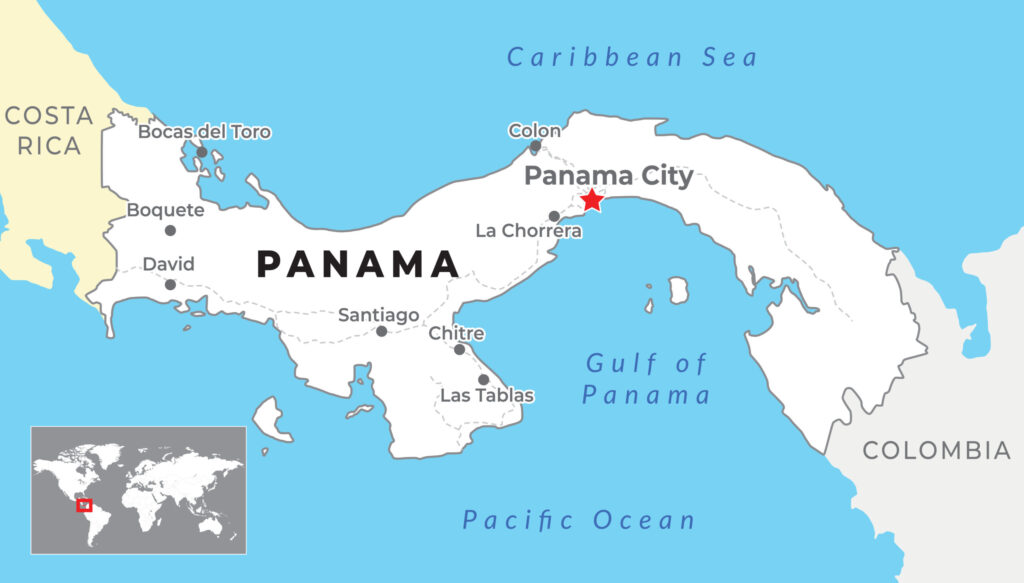
Panama lies on the narrow isthmus connecting North and South America and serves as the "crossroads of the Americas". Its land area is 75,517 km², slightly smaller than Hokkaido in Japan. The Panama Canal, linking the Atlantic and Pacific Oceans, runs through the centre of the country and gives it an extremely important strategic and economic position.
1-2. Population and a multicultural society
The total population is about 4.3 million (July 2020 estimate), of whom about 880,000 live in the capital, Panama City. Panama is a multicultural society shaped by Spanish, African and indigenous peoples and by people from around the world who worked on building the canal, and it is very open to foreigners.
1-3. Language and currency: an accessible environment
The official language is Spanish, but English is widely spoken in business and in tourist areas. Panama has its own currency, the balboa, but in practice the US dollar (USD) circulates as official currency. Because the economy is dollar-based, exchange rate risk is low, and Panama is also an excellent safe haven for protecting assets.
1-4. Resilient economic growth (GDP)
GDP reached about US$76.3 billion in 2022.
GDP has grown steadily since 1988, rebounded strongly in 2021 from the temporary pandemic downturn, and recorded real GDP growth of 9.50% in 2022.
2. Why move to Panama now? Five major advantages
2-1. World-class tax efficiency: territorial taxation
Panama's greatest attraction is its tax system. Panama uses a territorial tax system, under which only income arising in Panama is taxed. This means that remote-work income from Japan or third countries, returns on overseas investments and foreign pensions are not subject to income tax in Panama. However, for Japanese pension recipients: there is no tax treaty between Japan and Panama, so Japanese public pensions are subject to 20.42% withholding tax in Japan (for those aged 65 and over, tax is levied on the amount remaining after a deduction of JPY 95,000 per month). In addition, there is no capital gains tax on foreign investments, no inheritance tax and no wealth tax.
2-2. High quality of life at a reasonable cost
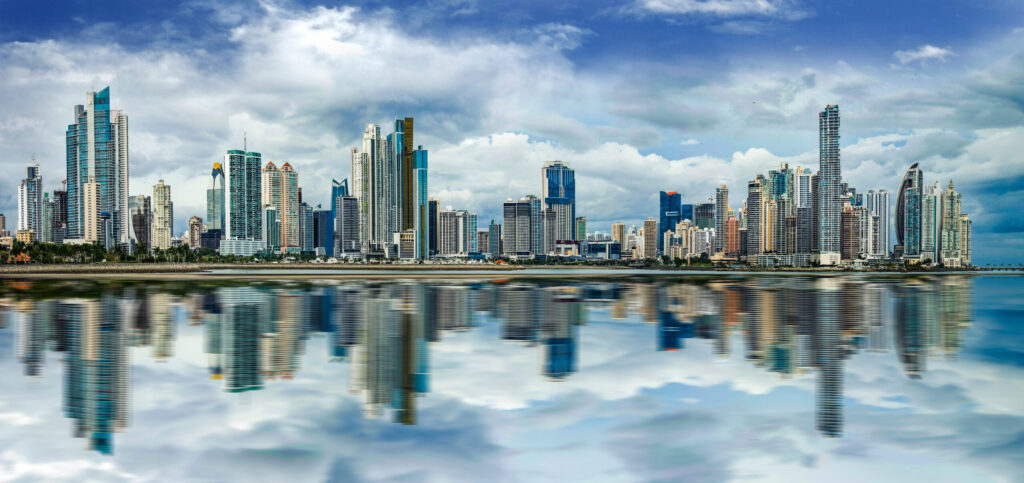
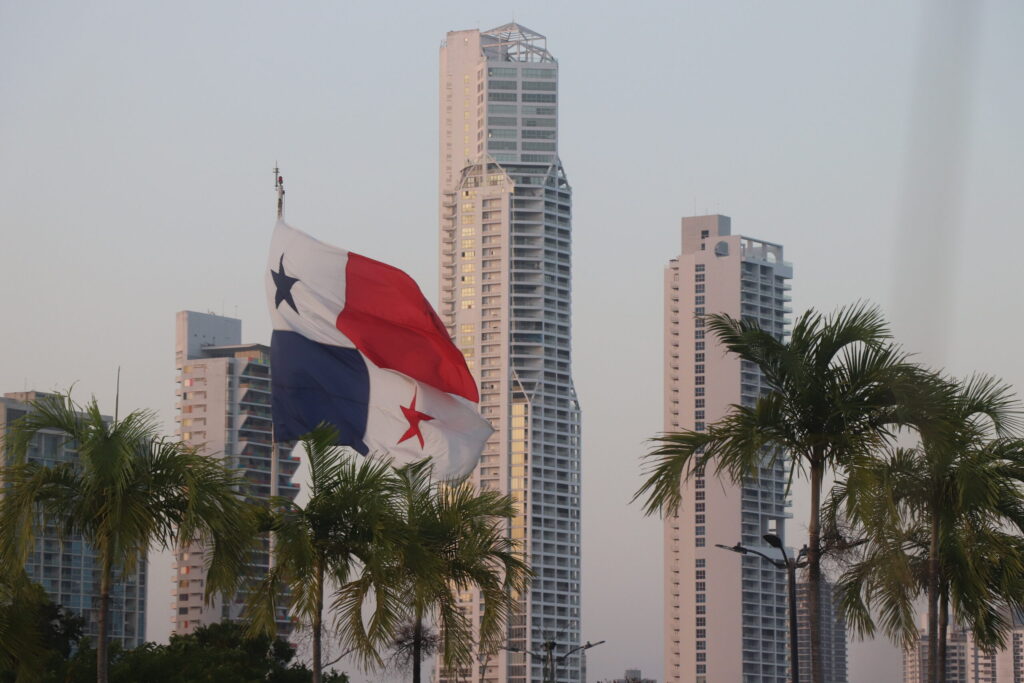
Panama City is an international city lined with modern high-rise buildings, and living costs are in US dollars. Rent for a one-bedroom apartment in Panama City is around US$1,100–1,900 per month (2026, local real estate agencies), and the safer the district, the higher the rent. Rent, food, healthcare and safety are covered in detail in Safety and Cost of Living in Panama (in Japanese).
2-3. US-standard healthcare
Private medical facilities in Panama City are well equipped, and most expatriates take out private health insurance and use private hospitals. Public healthcare, on the other hand, continues to suffer from a shortage of specialists (as of March 2026, the Social Security Fund had at least 71 specialist vacancies).
2-4. Very relaxed conditions for maintaining permanent residence
Panamanian permanent residence is easy to maintain. To keep it valid, visiting Panama for just a few days once every two years is sufficient, and there is no minimum number of days per year (confirmed with our partner agent in October 2026). However, if you aim for Panamanian citizenship (naturalisation), you must live there continuously for five years after obtaining permanent residence (see 5-1 below).
2-5. A reliable business foundation: the ELETA Group
The maturity of Panama's business environment can also be seen in the history of its leading local companies.
For example, the ELETA Group, with a history of about 60 years in Panama, has succeeded in a wide range of fields including energy, real estate and telecommunications. Its founder, Fernando Eleta, was a visionary leader who served as Panama's Minister of Finance and Minister of Foreign Affairs and was involved in negotiating the Panama Canal treaties.
This solid business foundation is also a major source of reassurance for investors.
3. Main permanent residence visa routes in 2026
First, here is a list of the main routes available to Japanese nationals (as of October 2026).
| Visa | Main conditions | Residence status |
|---|---|---|
| Friendly Nations | An employment contract with a local company and a work permit, real estate worth at least US$200,000, or a US$200,000 fixed-term deposit (3 years) | 2 years of temporary residence, then apply for permanent residence |
| Qualified Investor (investment) | US$300,000 in new or first-sale real estate, US$500,000 in resale real estate, US$500,000 in securities, or a US$750,000 fixed-term deposit (US$500,000 at a state bank). Maintained for 5 years | Permanent residence from the start |
| Pensionado (pension) | A lifetime pension of at least US$1,000 per month (at least US$750 per month if you own real estate worth at least US$100,000) | Permanent residence from the start |
| Remote Worker (short-term) | Income from outside Panama of at least US$36,000 per year | Short-term stay of up to 18 months (does not grant residence rights) |
3-1. Friendly Nations Visa
Japan is on Panama's list of "friendly nations", so Japanese nationals can use this programme. Since the rules were revised in 2021, applicants must now meet one of the following conditions.
- Real estate investment: Purchase real estate in Panama worth at least US$200,000 (bank financing may be used).
- Local employment: Sign an employment contract with a legally established Panamanian company and obtain a work permit.
- Fixed-term deposit: Deposit US$200,000 in a Panamanian bank for three years.
Under this route, you are first granted a two-year temporary residence permit and then apply for permanent residence.
3-2. Qualified Investor Visa (Panama's Golden Visa)
This programme is for high-net-worth individuals who want to obtain permanent residence as quickly as possible. By making one of the following investments, you are granted permanent residence from the start, without a period of temporary residence. The investment amounts were amended by Executive Decree No. 17 of September 8, 2026.
- Real estate: A real estate investment of at least US$300,000 for a new or first-sale property, or at least US$500,000 for a resale property.
- Securities investment: Purchase securities worth at least US$500,000 through the Panama Stock Exchange.
- Fixed-term deposit: Deposit at least US$750,000 in a private Panamanian bank (at least US$500,000 at the state-owned Banco Nacional de Panamá or Caja de Ahorros) for five years.
The greatest advantage of this route is that you obtain permanent residence from the start, without going through a period of temporary residence.
3-3. Pensionado Visa (retiree visa)
This is one of the world's best retiree programmes, for people receiving a lifetime pension. The condition is a lifetime pension (public or private) of at least US$1,000 per month. Substantial discounts on airfares, restaurants, medical expenses and more are guaranteed by law.
4. A notable investment project: Passage Amador
When considering permanent residence through investment, choosing the right property is extremely important.
As of 2026, Passage Amador, located at the entrance to the Panama Canal, is attracting attention.
- Architectural design: A landmark design that blends the heritage architecture of the Panama Canal with contemporary elements.
- Sustainability: The buildings are designed for the tropical climate, and the sustainable landscaping features more than 30 native plant species.
- A trusted investment: The ELETA Group mentioned above, among others, is involved, making it a highly reliable project as an investment.
Global business leader Merle Hinrich (founder of Global Sources) has also invested in Panama for more than ten years and holds Panamanian permanent residence himself.
5. The path to Panamanian citizenship (passport)
Acquiring Panamanian citizenship and holding a Panamanian passport is a very effective way of diversifying future risk.
5-1. Conditions for naturalisation
You become eligible to apply after living in Panama continuously for five years after obtaining permanent residence. You must have a basic knowledge of Spanish and pass an exam on Panama's history, geography and civic rights. On naturalisation, you declare the renunciation of your original nationality under Article 10 of the Panamanian Constitution. For Japanese nationals: under Japan's Nationality Act (Article 11), a Japanese national loses Japanese nationality upon voluntarily acquiring a foreign nationality.
5-2. The value of a Panamanian passport
As of 2024, the Panamanian passport ranked 30th in the world, a very strong passport allowing visa-free travel to more than 149 countries. It also allows free entry to the Schengen Area in Europe, making it a valuable asset for securing global freedom of movement.

6. A concrete timeline for obtaining Panamanian permanent residence and the permanent resident card
An application for Panamanian permanent residence proceeds through the following steps.
- Engagement and due diligence (about 1–2 months): Select a lawyer and undergo a background check. During this period, obtain apostilles for the required documents from Japan (such as a criminal record certificate).
- Investment procedures and property purchase: Sign the property purchase contract and transfer funds in line with the requirements of the visa you have chosen.
- Submission of the permanent residence application: Submit the documents to the National Migration Service. Once accepted, a provisional card is issued.
- Issuance of the permanent residence permit (about 30 days): For the Qualified Investor Visa, the Ministry of Commerce and Industries certifies the investment and the National Migration Service then reviews the application. The timeframe depends on how well your documents are prepared, so plan with plenty of margin.
- Visit to Panama and receipt of the card (about 1–2 months): Travel to Panama and receive your permanent resident ID card (cédula) at the National Migration Service.
7. Points to note in 2026 and common mistakes
- Apostilles and translation of documents: All public documents must be apostilled in Japan and translated into Spanish by a certified Panamanian translator. Many applications are not accepted because of deficiencies here.
- Obligation to maintain the investment: To keep permanent residence, you must maintain the investment for at least five years. If you sell the property within five years, your permanent residence may be revoked.
- Hiring a lawyer: Under Panamanian law, all immigration applications must be filed through a lawyer licensed by the Panamanian government.
Note: for readers researching a move to Panama after hearing about the Panama Papers
Many people first learned about Panama through the term "Panama Papers". News coverage highlighted words with strong connotations, such as offshore companies, asset management and tax avoidance, but to understand Panama as a country, it is important not to judge it solely on the image created by past reporting.
If your interest was sparked by the Panama Papers, the first thing to understand is that "having a company or account in Panama" and "having your base of life in Panama" are separate issues. Permanent residence, actual residence, tax residence, asset management and inheritance or business succession are each judged by different criteria, and simply using Panama's systems does not solve everything.
At the same time, the reasons why Panama is often on the shortlist of wealthy individuals and investors are clear. Its US dollar economy, its development as an international financial and logistics hub, its territorial tax system and its relatively relaxed conditions for maintaining permanent residence are all important considerations for anyone thinking about moving abroad or protecting their assets. If you would like to compare Panama with other countries in terms of how easy permanent residence is to obtain and maintain, see Countries Where It Is Easy for Japanese Nationals to Obtain Permanent Residence (in Japanese).
However, the more your interest in moving to Panama stems from the Panama Papers, the more carefully you should check compliance. If you proceed without sorting out your tax residence status in Japan, Japan's exit tax, explanatory documents for financial institutions, the source of your funds, where your family lives and the substance of your business, you may not only fail to achieve the effect you expected but also face heavier accountability later.
For this reason, if you are considering a move to Panama prompted by the Panama Papers, it is important not to think simply "it looks like I can save tax", but to consider together your purpose in obtaining permanent residence, your actual plans for staying there, your family's life plans and the transparency of your asset management. To make the most of the system's advantages, an overall plan that covers not only the local rules but also the tax and legal aspects on the Japanese side is essential.

Opening the door to a new life in Panama
Even in 2026, Panama remains a very strong relocation option for people based in Japan, thanks to its open immigration policy and outstanding tax advantages. In particular, an environment that combines "asset protection within a US dollar economy" with "maximised cash flow through territorial taxation" is rare anywhere in the world.
Specialist knowledge and local support are essential for the procedures. Start by consulting a trusted partner and considering the route that best fits your life plan.
Feel free to contact us
If you are interested in Panamanian permanent residence, please feel free to contact us.
Free consultation form
Phone: +81-3-6303-1664 (weekdays 9:00–20:00 Japan time)
info@royal-ptns.com
Email enquiries accepted 24 hours a day.
We never use pushy sales tactics. We can assist in English and Japanese.
2-19-4-506 Azabu-Juban, Minato-ku, Tokyo 106-0045, Japan
Royal Partners Administrative Scrivener Office
Taiga Sato, Certified Administrative Scrivener (Specified)