Moving to Thailand: Visa Requirements and Costs [2026] | Retirement Visa, LTR and DTV Compared

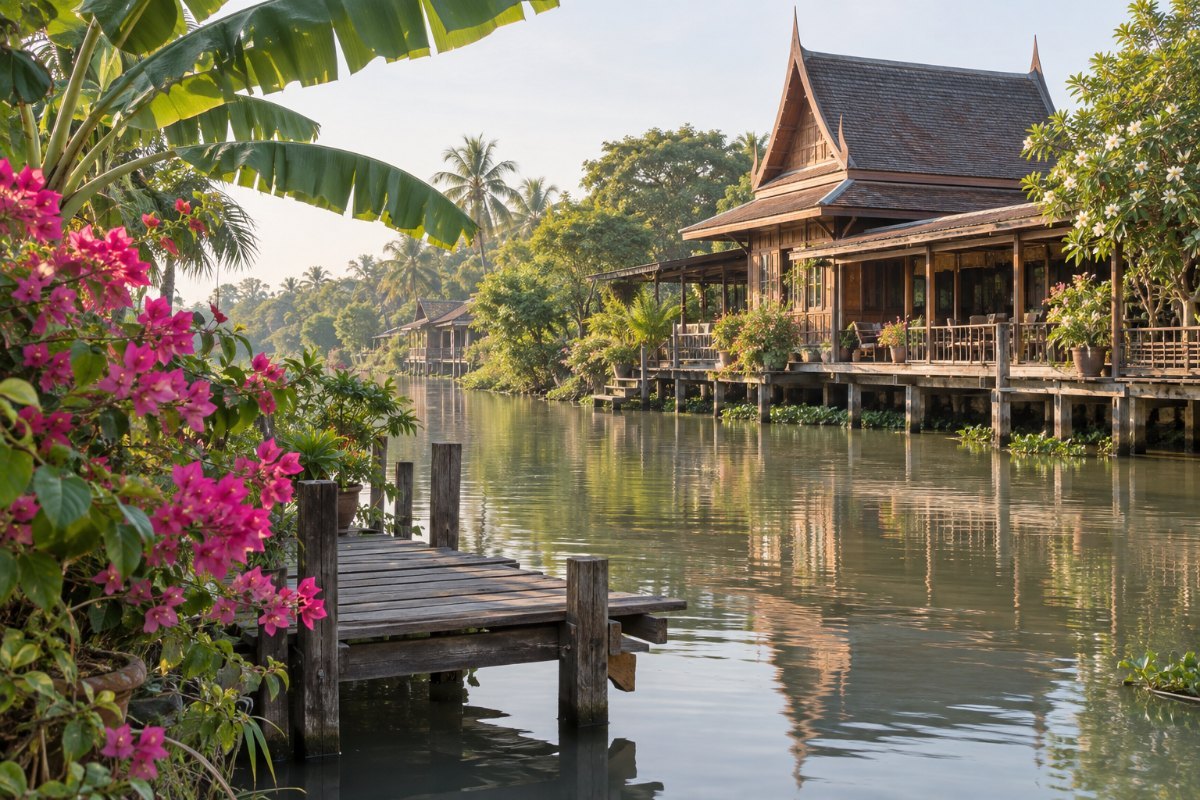
Long-term stay options for relocating to Thailand fall into four categories: the retirement visa for those aged 50 and over, the LTR visa, which allows a 10-year stay, the DTV for remote workers, and Thailand Privilege, which you obtain by paying a membership fee. The choice comes down to two questions: "Are you 50 or older?" and "How much can you afford to pay, including the taxes you would owe in Thailand?" There is, however, a pitfall with Thai permanent residence: no matter how many years you renew a retirement visa, there is simply no permanent residence application category for retirees. This article sets out the requirements and costs of the four options, living costs in Bangkok, the 180-day rule and the taxation of foreign income remitted to Thailand, and the path to permanent residence and citizenship, based on information published by Thailand's Ministry of Foreign Affairs and other sources.
*Amounts and rules are as of September 16, 2026. This article is an English version of our Japanese guide, adapted for foreign residents of Japan and international investors.
*This article is a general explanation based on information published as of September 16, 2026 (the Department of Consular Affairs of Thailand's Ministry of Foreign Affairs and Thai embassies/consulates-general abroad, the Thai General Insurance Association's long-stay insurance guidelines, the Thailand Board of Investment (BOI) information on the LTR visa, and commentary by local law and accounting firms). Thai visa rules are known to be applied differently depending on the embassy, consulate or immigration office handling the application, and the required documents and the interpretation of how long funds must be held can vary. Before applying, please confirm your individual eligibility and any tax questions with a professional and with the office where you will apply.
Our articles on relocating to Thailand
- Why people regret moving to Thailand: the downsides (in Japanese): the weak yen, tax on pensions, medical insurance and air pollution
Contents
- Summary: four visa options, with the line drawn at age 50
- Retirement visa (50+): Non-O, O-A and O-X compared
- LTR visa (10 years): pension, remote work and wealth routes
- DTV (5 years): a newer option for THB 500,000
- Thailand Privilege (formerly Thailand Elite): an option if you meet no other criteria
- Obligations during your stay: 90-day reports, TM30 and re-entry permits
- Living costs: THB 48,500 for a single person and THB 68,000 for a couple in Bangkok
- Tax: the 180-day rule and the "remittance basis" for foreign income
- Thai permanent residence and citizenship: the 100-per-year quota
- Frequently asked questions
- Conclusion: retirement visa if you are 50+, DTV or LTR if you are younger
Summary: four visa options, with the line drawn at age 50
First, here are the four options at a glance. Thailand has no single "immigration visa". Instead, you obtain a visa for a specific purpose and then extend your permission to stay inside Thailand every year (or every few years).
| Visa | Who it suits and main requirements | Age | Duration |
|---|---|---|---|
| Retirement (Non-O / O-A / O-X) | People who will live in Thailand after retiring. THB 800,000 in a Thai bank, or monthly income of at least THB 65,000 | 50 and over | Renewed annually (O-X: 5 + 5 years) |
| LTR visa | People who meet the criteria through pension income, remote work or assets, e.g. annual income of US$80,000 | No limit (pensioner category: 50 and over) | 10 years (5 + 5 years) |
| DTV | People continuing work for overseas clients, or learning Muay Thai or Thai cooking. A balance of THB 500,000 | No limit | 5 years (180 days per stay) |
| Thailand Privilege | People who want a right to stay even without meeting any criteria. THB 650,000 to THB 5,000,000 | No limit | 5 to 20 years |
If you are under 50, will not work in Thailand, and do not have a particularly high income or large assets, your realistic options are the DTV and Thailand Privilege. Conversely, if you are 50 or older, the retirement visa is the cheapest option.
Under any visa, working inside Thailand requires a separate work permit. Working for a Thai employer is not permitted on the retirement visa, the DTV or Thailand Privilege. Continuing to work for an overseas company from Thailand is explicitly permitted on the DTV and the LTR visa.
Retirement visa (50+): Non-O, O-A and O-X compared
Thailand actually has three visas for retirees. All are called "retirement visas", but where you obtain them, the funds required and the treatment of medical insurance differ completely, so confusing them can waste your preparation.
| Item | Non-O (obtained inside Thailand) | O-A (obtained from abroad, e.g. in Japan) | O-X (obtained from abroad, e.g. in Japan; 10 years) |
|---|---|---|---|
| Age | 50 and over | 50 and over | 50 and over |
| Funds required | THB 800,000 in a Thai bank, or monthly income of THB 65,000 | Same as left | A fixed deposit of THB 3,000,000, or THB 1,800,000 plus annual income of THB 1,200,000 |
| Medical insurance | Generally not required | Required (see below) | At least THB 40,000 outpatient / THB 400,000 inpatient |
| Criminal record certificate | Not required | Required | Required |
| Medical certificate | Not required | Required | Required |
| Duration | Extended annually | Extended annually | 5 years + 5 years = up to 10 years |
| Eligible nationalities | No restriction | No restriction | Only 14 countries, including Japan |
In practice, the Non-O is the most widely used. You enter on a tourist visa or visa exemption and switch inside Thailand, and its biggest advantage is that no medical insurance, criminal record certificate or medical certificate is required. The O-A can be obtained from abroad (for example in Japan), but the document preparation is heavier.
The O-A medical insurance requirement is basically at least THB 40,000 for outpatient and THB 400,000 for inpatient cover. In addition, since October 2021 a practice of requiring total coverage of at least THB 3,000,000 (or the equivalent of US$100,000) has been added, and as of 2026 the level required still varies by the office handling the application. Always check with the embassy or consulate where you plan to apply.
Watch the "holding period" for the THB 800,000
The most common stumbling block with the deposit method is from when and until when the balance must be maintained. The funds must be held for several months before the first application and for several months before and after each extension application, and the balance must also not fall below THB 400,000 at any time during the year. Interpretations of this holding period differ between immigration offices, so assuming that "transferring the money just before applying is enough" is risky. The safe approach is to open an account and move the funds about six months before you go.
You can also apply on the basis of monthly income of at least THB 65,000, but this requires an income certificate issued by your embassy, and some countries have stopped issuing such certificates. For Japanese nationals, in practice, the deposit method is the more reliable route.
On costs: changing your status to Non-O costs THB 2,000, the one-year extension application fee is THB 1,900, and a re-entry permit costs THB 1,000 (single) or THB 3,800 (multiple). The O-X visa application fee is THB 10,000. The visas themselves are quite cheap compared with other countries; the main costs are living expenses and medical insurance.
LTR visa (10 years): pension, remote work and wealth routes
This 10-year long-term resident visa was launched in 2022 by the Thailand Board of Investment (BOI). There are four categories, and the three realistic ones for most individuals are the pensioner category, the remote worker category and the wealthy category.
| Category | Main requirements | Age |
|---|---|---|
| Wealthy Global Citizen | Total assets of at least US$1,000,000, of which US$500,000 is invested in Thai government bonds, shares, real estate, etc. | No limit |
| Wealthy Pensioner | Passive income such as a pension of US$80,000 a year, or US$40,000 a year plus an investment of US$250,000 in Thailand | 50 and over |
| Work-from-Thailand Professional | Employed by an overseas company with annual income of US$80,000 over the last two years (US$40,000 a year with a master's degree, etc.) | No limit |
| Highly-Skilled Professional | Working in a targeted industry in Thailand with annual income of US$80,000 (US$40,000 a year with a master's degree, etc.) | No limit |
The strengths of the LTR visa are that the most burdensome obligation under Thai visas, the "90-day address report", becomes once a year, and that you can bring up to four dependants. In addition, foreign-sourced income is treated as tax-exempt in the three categories of wealthy, pensioner and remote worker. In the highly-skilled category, income tax on salaries earned in Thailand is reduced to a flat 17%.
In every category, you need either medical insurance of at least US$50,000, Thai social security coverage, or a deposit of at least US$100,000 held for 12 months. The visa fee is THB 50,000 for ten years, plus THB 3,000 a year if a work permit is required.
Following a 2025 review, the income requirement was removed from the wealthy category, which is now assessed on assets and investment amount alone. Also, with the Marriage Equality Act coming into force that year, same-sex spouses can now accompany the holder.
An annual income of US$80,000 may look high. But given how light the administrative burden is, with almost no tax payable in Thailand and no 90-day reports, it is the most comfortable option if you can meet the criteria.
DTV (5 years): a newer option for THB 500,000
The Destination Thailand Visa was introduced in 2024. It is a five-year multiple-entry visa, and because it has no high income threshold like the LTR, it has become the most realistic option for people under 50 who want to live in Thailand for a long time.
| Item | Details |
|---|---|
| Eligibility | (1) Workation (remote work or freelancing for overseas companies or clients), (2) Thai "soft power" activities (Muay Thai, Thai cooking, medical treatment, seminars, the arts), (3) spouses and children under 20 of (1) or (2) |
| Funds required | A balance of THB 500,000. Many embassies require it to be held for the three months before applying |
| Validity | 5 years (multiple entry) |
| Each stay | 180 days. One 180-day extension is possible inside Thailand (360 days in a row). After that you must leave and re-enter |
| Application fee | THB 10,000 (varies by place of application) |
| Work | Working for a Thai company is not permitted. Remote work for overseas clients is permitted |
There are two points to watch. The first is the holding period for the balance: there are a growing number of cases where funds deposited just before applying are not accepted. The second is stricter screening: since the end of August 2026, some embassies have begun requiring proof of residence and a criminal record certificate issued within six months, and for freelancers even the consistency of contracts and invoices is examined. The refusal rate is higher than when the scheme began.
In addition, because DTV permission to stay is "divided into 180-day blocks", continuity as a resident of Thailand is hard to establish, and it does not lead to the permanent residence or citizenship applications discussed below. It is accurate to think of it as a status for "staying a long time without paying tax", not for "putting down roots in Thailand".
Thailand Privilege (formerly Thailand Elite): an option if you meet no other criteria
This is the former Thailand Elite card. Its defining feature is that there are no age, income or asset requirements at all; you obtain it by paying the membership fee, which makes it an option for people who cannot meet the criteria for any of the visas above.
| Tier | Fee | Validity |
|---|---|---|
| Bronze | THB 650,000 | 5 years |
| Gold | THB 900,000 | 5 years |
| Platinum | THB 1,500,000 | 10 years |
| Diamond | THB 2,500,000 | 15 years |
| Reserve | THB 5,000,000 | 20 years |
There is no annual fee; the cost is a one-off payment on joining. Benefits include airport fast-track and transfers, but you cannot work (it is classified as a tourist visa). Remote work for an overseas employer is said to be permitted.
The cheapest tier, Bronze, is stated to be open for applications until September 30, 2026, and what happens afterwards has not been announced. If you are considering it, check the deadline.
In terms of value for money, THB 650,000 for five years is in a completely different league from the THB 10,000 DTV. People still choose it because they are buying peace of mind: unlike the DTV, there is no need to worry about leaving and re-entering every 180 days or proving a balance, and the right to stay is secured without any eligibility screening. In the sense of obtaining a right to stay in exchange for payment, it is similar in concept to golden visas (in Japanese), but the decisive difference is that it does not lead to permanent residence.
Obligations during your stay: 90-day reports, TM30 and re-entry permits
What confuses newcomers most about Thai visas are the obligations that continue after you obtain one. Neglecting them can lead to fines or become grounds for refusal when you apply for an extension.
| Procedure | Details | If neglected |
|---|---|---|
| 90-day report | Each time you stay continuously for more than 90 days, report your address to immigration. Online or in person. Free of charge | Fine; a disadvantage in extension screening |
| TM30 | The owner of the accommodation (landlord or hotel) must notify the authorities within 24 hours of a foreign national moving in | Fine; your 90-day report may not be accepted |
| Re-entry permit | If you leave the country while on an extension, your permission to stay lapses unless you obtain this in advance. THB 1,000 (single) / THB 3,800 (multiple) | Your permission to stay is cancelled and you must obtain a visa again |
| Annual status check | Some visas, such as the O-X, require you to report in person once a year | Cancellation of status |
In particular, forgetting the re-entry permit is a classic real-world mistake. Even if you hold a one-year permission to stay, it disappears the moment you leave without a re-entry permit, and you have to start over when you come back. With the LTR visa, the 90-day report becomes annual and re-entry is unlimited, so this burden almost disappears.
Living costs: THB 48,500 for a single person and THB 68,000 for a couple in Bangkok
These are guideline living costs for a Japanese person living in Bangkok. The figures assume eating Japanese food two or three times a week and living in a condominium.
| Item | Single | Couple |
|---|---|---|
| Rent (condominium) | THB 18,000 | THB 25,000 |
| Utilities | THB 3,000 | THB 3,500 |
| Food | THB 18,000 | THB 25,000 |
| Transport | THB 3,000 | THB 4,000 |
| Phone and internet | THB 1,500 | THB 2,500 |
| Entertainment and other | THB 5,000 | THB 8,000 |
| Total | THB 48,500 | THB 68,000 |
Note that these amounts do not include medical costs. Private hospitals in Thailand offer a high standard of care but are also expensive, and Japan's national health insurance cannot be used there. International medical insurance taken out after age 50 can easily cost several hundred thousand yen a year. Insurance is not mandatory for the retirement visa, but in practice it should be counted as part of your living costs.
Also, the assumption that "Thailand is cheap" is breaking down for a Japanese-style lifestyle. Condominium rents in central Bangkok are rising, and Japanese food and imported goods cost as much as or more than in Japan. It is realistic to think of the THB 48,500 for a single person in the table above as not very different from the cost of living in a regional city in Japan.
If you want to keep costs down, Chiang Mai and other regional cities are options. Rent can drop to about half, but there are fewer medical facilities where Japanese is spoken and fewer Japanese food options.
Tax: the 180-day rule and the "remittance basis" for foreign income
Tax is the most commonly overlooked aspect of moving to Thailand. If you stay in Thailand for 180 days or more in a calendar year, you become a Thai tax resident. Once you cross that line, the treatment of income earned abroad changes.
| Timing / situation | Treatment |
|---|---|
| Income earned before January 1, 2024 | Not taxed even if remitted to Thailand (Revenue Department Order Por.162/2566) |
| Income earned on or after January 1, 2024 | Taxable when remitted to Thailand, regardless of when it is remitted (Revenue Department Order Por.161/2566) |
| Tax rates | Progressive, 5% to 35%. A tax credit under the Japan–Thailand tax treaty may be available |
| If not remitted to Thailand | Not taxed (remittance basis) |
| LTR visa: wealthy, pensioner and remote worker categories | Foreign-sourced income is tax-exempt |
In 2025, a relaxation was discussed under which income would be exempt if remitted in the year it was earned or the following year, but as of 2026 it has not been published in the Royal Gazette and has not become law. Planning fund transfers on the assumption that this relaxation will happen is risky at present.
The practical countermeasure is clear: move the living funds you will need for the near term into a Thai account before you become a Thai tax resident (that is, by the year before you move). Even income earned in or after 2024 is not taxed in Thailand if it is remitted in a year when you are not a Thai resident.
You should also check your position in Japan. Japanese tax residence is not determined by days of stay alone but by where the center of your life is. In addition, people holding securities and similar assets worth JPY 100 million or more are subject to Japan's exit tax (taxation on departure from Japan) when they become non-residents of Japan. These points are covered in Taxes and resident registration procedures when moving abroad (in Japanese) and The exit tax and the JPY 600 million and JPY 3 billion thresholds (in Japanese).
Thai permanent residence and citizenship: the 100-per-year quota
This is the most important part of this article. Thailand does have permanent residence, but for retirees who have moved there it is, by design, extremely difficult to reach.
| Item | Details |
|---|---|
| Prerequisite | Three consecutive years of extensions in the same category |
| Application categories | Investment (at least THB 10,000,000 in a Thai company, shares, etc.) / Employment (a salary of THB 80,000 a month for at least two years, or at least THB 100,000 a year in income tax paid for at least two years) / Humanitarian (married to a Thai national for at least two years, or the biological parent or child of a Thai national) / Expert / Special category |
| Annual quota | 100 people per nationality per year (a separate quota of 50 for stateless persons) |
| Fees | THB 7,600 at application, and THB 191,400 on approval (THB 95,700 for spouses of Thai nationals) |
| Thai language | No formal requirement, but the interview is conducted in Thai |
| Processing time | Officially about six months; in practice one to three years |
| Path to citizenship | At least a further five years after obtaining permanent residence, with a Thai-language interview and a 100-point assessment |
There is no "retirement" application category. In other words, even if you keep renewing a retirement visa for 10 or 20 years, you never become eligible to apply for permanent residence. To aim for permanent residence, you must work in Thailand and earn a salary, invest at least THB 10 million in a company, or marry a Thai national.
The assumption that "after living there for some years I should be able to get permanent residence" does not apply in Thailand. In this respect, it is fundamentally different from European systems where five years of residence leads to permanent residence. To compare with European-style systems, see Portugal visa types and requirements and Greece visa types and permanent residence requirements (in Japanese).
For Japanese nationals: acquiring Thai nationality automatically results in the loss of Japanese nationality (Nationality Act, Article 11(1)). This is explained in Status of residence after losing Japanese nationality (in Japanese). If you want to start from the differences between permanent residence, citizenship, visas and tax residence, read Permanent residence, citizenship, visas and tax residence: the differences (in Japanese).
Frequently asked questions
How much money do I need to move to Thailand?
If you are 50 or older and take the retirement visa, you need a deposit of THB 800,000 in a Thai bank, plus living costs of around THB 48,500 a month for a single person. On top of this come medical insurance and return flights to your home country. The visa itself costs only about THB 1,900 a year, so the bulk of the money goes on the deposit and living costs.
Can I move to Thailand if I am under 50?
Yes. The DTV (a balance of THB 500,000) is the cheapest, followed by Thailand Privilege (from THB 650,000). If you are a remote worker earning at least US$80,000 a year, the LTR visa gives you a 10-year right to stay and tax exemption on foreign income.
How many years do I need to live in Thailand to get permanent residence?
Years of residence alone are not enough. The prerequisite is three consecutive years of extensions under the same status in a specific category such as investment, employment or marriage to a Thai national, and you must then get through the quota of 100 people per nationality per year. There is no application category at all for retirement visa holders.
Do I need medical insurance for a retirement visa?
The Non-O obtained inside Thailand generally does not require it; the O-A obtained from abroad does. Even without insurance, however, private hospitals in Thailand are expensive and Japan's national health insurance cannot be used. Whether insurance is legally required and whether you actually need it are separate questions.
For Japanese nationals: what happens to my Japanese pension if I live in Thailand?
Japanese pensions can be received while living abroad. You can receive them in an account at a financial institution in Japan or have them sent to an overseas account. However, if you remit your pension to Thailand, it may be taxable in any year in which you are a Thai tax resident. We recommend sorting out how you will receive your pension and when you will remit it before you move. Note also that the Japan–Thailand tax treaty has no article on ordinary pensions, so Japanese public pensions are subject to 20.42% withholding tax in Japan as well, and exemption by filing a notification is not available. Points that people often regret after moving, such as tax on pensions and medical insurance, are explained in detail in Why people regret moving to Thailand: the downsides (in Japanese).
Can I work in Thailand?
On the retirement visa, the DTV and Thailand Privilege, you cannot work for a Thai employer. Working in Thailand requires a work permit, which is obtained through the employer. On the other hand, continuing to work for an overseas company from Thailand is explicitly permitted on the DTV and the LTR visa.
Conclusion: retirement visa if you are 50+, DTV or LTR if you are younger
Choose your Thai visa according to age and income. If you are 50 or older, the Non-O obtained inside Thailand (deposit of THB 800,000) is the cheapest option with the least hassle. If you are under 50, the DTV (balance of THB 500,000) is the entry point, and if you can meet the US$80,000 annual income requirement, the LTR visa offers ten years of stability and tax exemption on foreign income. Thailand Privilege is the fallback if you cannot meet any of these criteria.
On the other hand, permanent residence and citizenship are a separate matter. Thai permanent residence has no application category based on retirement, and the annual quota is 100 per nationality. The idea that "if I live there long enough I will eventually get permanent residence" does not work. Having read the rules, our conclusion is that Thailand is "an easy country to live in", not "an easy country to get permanent residence in". For a comparison with countries where it is easier, see Countries where it is easy to get permanent residence (in Japanese).
How Thailand compares with other countries
In Southeast Asia, Malaysia's MM2H is the natural comparison. In exchange for placing a fixed deposit, MM2H grants a right to stay of up to 20 years, with less frequent renewals than Thailand. Its requirements and costs are explained in detail in Malaysia MM2H requirements and costs (in Japanese). Life in Malaysia (living costs, international school fees, choosing a city) is covered in Requirements and costs of moving to Malaysia. If permanent residence or citizenship is part of your plan, European-style systems are more realistic. The minimum costs by country are listed in Costs of permanent residence abroad compared by country (in Japanese).
Our office offers consultations comparing relocation visas, permanent residence and citizenship in various countries, including Thailand, and handles the apostilles, translations and family register (koseki) requests for Japanese documents needed for applications (Apostille, translation and certification services (in Japanese), Obtaining family register certificates from overseas (in Japanese)). If you would like to work out which visas are available to you based on your age, income and family situation, please use our free consultation. We never use pushy sales tactics. We can assist in English and Japanese.
- Free consultation form
- Phone: +81-3-6303-1664 (weekdays 9:00–20:00 Japan time)
- Email: info@royal-ptns.com
- Our services and how consultations work (in Japanese)
References (primary sources)
- Royal Thai Consulate-General, Chicago: Non-Immigrant Visa O-A / O-X requirements
- Royal Thai Embassy, Oslo: Non-Immigrant Visa O-X (10-year long stay)
- Thai General Insurance Association (TGIA): medical insurance guidelines for the O-A visa
- HLB Thailand 2026: LTR visa requirements and benefits
- Thailand Starter Kit: LTR visa (including the 2025 changes to requirements)
- Thailand Starter Kit: DTV (Destination Thailand Visa) requirements
- Thailand Starter Kit: Thai permanent residence requirements, quota and costs
- Siam Legal International: Thailand Privilege membership tiers and prices
- Brer Rabbit Legal 2026: taxation of remitted foreign income and the legal status of the proposed relaxation
- Kurasu Asia: living costs in Bangkok, Thailand (real examples from Japanese residents)
- Mitsubishi UFJ Research and Consulting: foreign exchange rates (mid-rate on September 16, 2026)
Rules and amounts in this article are as of September 16, 2026.