Dominica Citizenship by Investment: Costs, Requirements and Process [2026] – Passport from a US$200,000 Donation, the EU Abolition Demand and Japanese Nationality

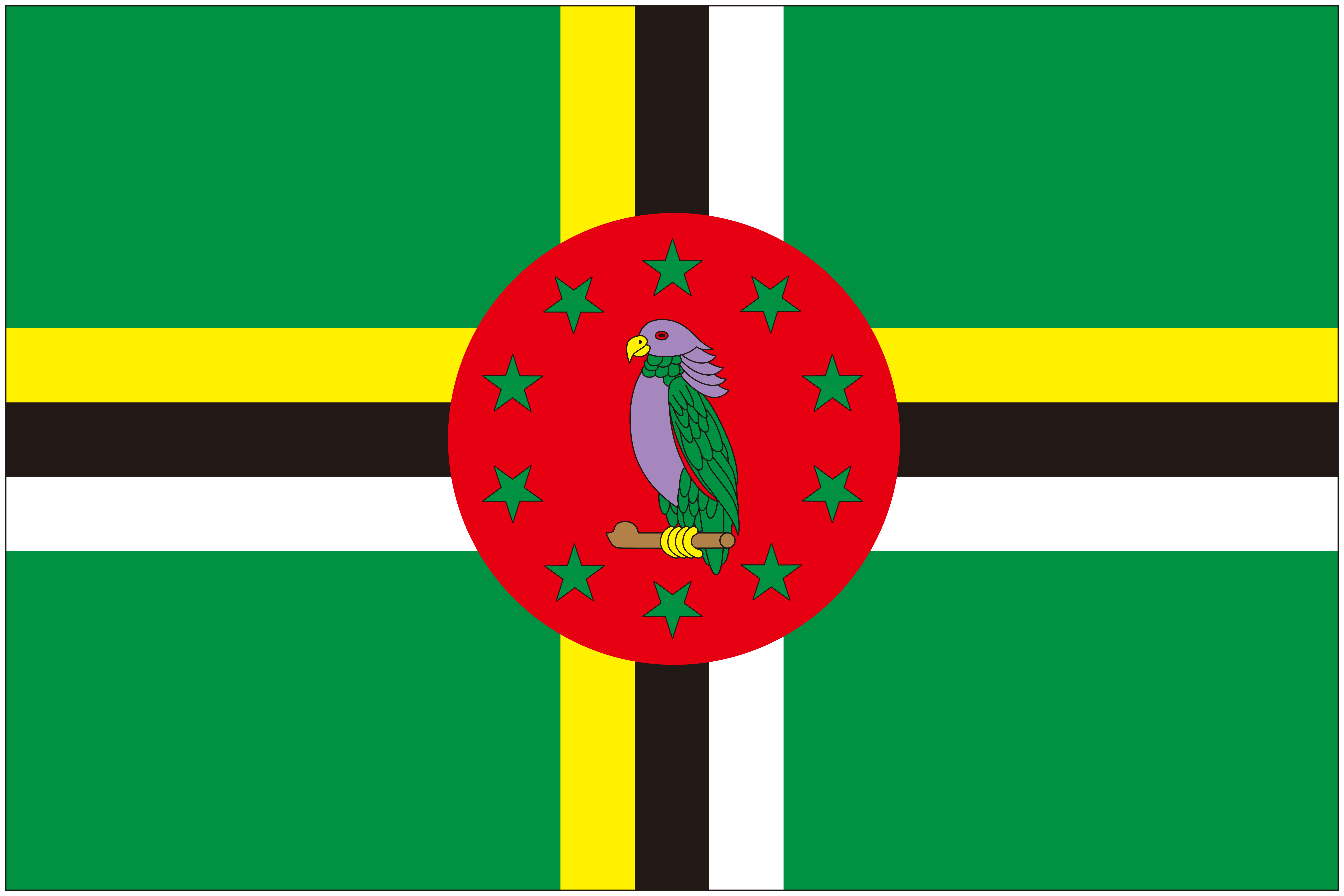
The Commonwealth of Dominica, an island nation in the Caribbean, has operated a citizenship by investment (CBI) programme since 1993, granting citizenship in return for a donation to a government fund or an investment in approved real estate. As of October 2026, the minimum donation is US$200,000 for a single applicant and US$250,000 for a family of up to four, plus due diligence and interview fees. There is no residence requirement and no language test, and the official processing time to approval in principle is 3 to 4 months, although in practice many cases take longer. The environment around the programme, however, has changed significantly since 2025. The EU has called for the programme to be abolished by June 2028, and the United States partially suspended visa issuance to Dominican nationals from January 2026 (the UK has required visas since 2023, and Canada has long required them). For Japanese nationals, the most important point is that acquiring Dominica citizenship means automatically losing Japanese nationality. Based on information published by Dominica's Citizenship by Investment Unit (CBIU), Japan's Ministry of Foreign Affairs and Japan's Ministry of Justice, this article covers the costs, eligibility, process, documents to prepare in Japan, the strength of the passport, the changes in 2026, and the procedures on the Japanese side.
*Amounts and rules are as of October 12, 2026. This article is an English version of our Japanese guide, adapted for foreign residents of Japan and international investors. The total cost when applying through our office depends on your family composition, so please contact us.
Contents
- Summary: from a US$200,000 donation, no residence requirement, but Japanese nationality is lost
- What kind of country is Dominica? Not the Dominican Republic
- Costs: donation or real estate, and what you pay the government
- Eligibility: 18 or older, no criminal record, and a provable source of funds
- Process and timeline: through an authorised agent, with a mandatory interview
- Documents to prepare in Japan: family register, criminal record certificate and bank statements with apostilles
- Where the Dominica passport takes you: visa-free to the EU, visas needed for the UK, Canada and the US
- Changes in 2026: EU abolition demand, US visa suspension and a 30-day stay requirement
- Taxes: no Dominica tax, Japanese taxes unchanged
- For Japanese nationals: loss of Japanese nationality under Article 11 of the Nationality Act, the notification of loss and status of residence
- Frequently asked questions
- Summary points
Summary: from a US$200,000 donation, no residence requirement, but Japanese nationality is lost
| Item | Details |
|---|---|
| Investment options | A donation to the Economic Diversification Fund (EDF), or an investment of at least US$200,000 in government-approved real estate (plus government fees) |
| Minimum donation | US$200,000 for a single applicant; US$250,000 for the main applicant plus up to 3 dependants. Each additional dependant: US$25,000 (under 18) or US$40,000 (18 and over) |
| Main fees | Processing fee US$1,000; due diligence US$7,500 for the main applicant and US$4,000 for each family member aged 16 and over; interview US$1,000 (aged 16 and over); certificate of naturalisation US$500 |
| Government payments (single applicant) | About US$209,000, plus passport fees and agent fees |
| Residence and language | No residence requirement and no language test (documents are in English) |
| Processing time | Officially 3 to 4 months to approval in principle; private data puts the average at around 9 months |
| Interview | Mandatory for everyone aged 16 and over (usually online) |
| How to apply | Only through an authorised agent; the CBIU does not accept direct applications |
| Dual citizenship | Permitted by Dominica. Japan does not permit it, so Japanese nationals lose Japanese nationality upon acquisition |
| Passport | Visa-free or similar access to 145 countries and territories (2026). Currently visa-free to the Schengen Area; visas required for the UK, Canada and the US |
Among the five Caribbean CBI programmes, Dominica's is at the lowest end in cost for a single applicant. However, Japanese nationals cannot use it to "keep a Japanese passport and add a second one." It is a programme to consider only after deciding whether you need a Caribbean nationality even at the cost of giving up Japanese nationality. For foreign residents of Japan, whether your current nationality is affected depends on the law of your own country.
What kind of country is Dominica? Not the Dominican Republic
Dominica is an island nation in the Lesser Antilles of the Caribbean, with an area of 750 square kilometres and a population of 66,000 (Japan's Ministry of Foreign Affairs). The capital is Roseau, the official language is English, and the currency is the East Caribbean dollar (pegged at US$1 = EC$2.70). It became independent from the United Kingdom in 1978. According to Japan's Ministry of Foreign Affairs, no Japanese nationals were living in Dominica (October 2024), and there are no direct flights from Japan.
It is an entirely different country from the similarly named Dominican Republic (population about 11 million, Spanish-speaking, on the island of Hispaniola). The country that offers citizenship by investment is Dominica.
In September 2017, Category 5 Hurricane Maria made landfall, causing total damage and losses equal to 226% of the previous year's GDP and damaging about 90% of homes (World Bank). Much of the reconstruction has been financed by revenue from the citizenship programme, which has become a pillar of Dominica's public finances.
Costs: donation or real estate, and what you pay the government
Donation to the Economic Diversification Fund (EDF)
| Applicants | Donation |
|---|---|
| Main applicant only | US$200,000 |
| Main applicant plus up to 3 dependants | US$250,000 |
| Each additional dependant (under 18) | US$25,000 |
| Each additional dependant (18 and over) | US$40,000 |
Real estate investment
You invest at least US$200,000 in a property in a government-approved project (such as a hotel or villa development) and pay a separate government fee. The fee is US$75,000 for the main applicant, US$100,000 including up to 3 dependants, and US$25,000 (under 18) or US$40,000 (18 and over) for each additional dependant. The property must be held for 3 years from the grant of citizenship (5 years if it is resold to another CBI applicant).
Fees common to both options
| Fee | Amount |
|---|---|
| Processing fee | US$1,000 per application |
| Due diligence (background checks) | US$7,500 for the main applicant; US$4,000 per dependant aged 16 and over |
| Interview | US$1,000 per applicant aged 16 and over |
| Certificate of naturalisation | US$500 per person |
| Enhanced due diligence | May be required depending on nationality and other circumstances (amount not published) |
For a single applicant choosing the donation, the total paid to the government is US$200,000 + US$1,000 + US$7,500 + US$1,000 + US$500 = US$209,000. For a couple with two children aged 16 or over, it is US$250,000 + US$1,000 + US$7,500 + US$4,000 × 3 + US$1,000 × 4 + US$500 × 4 = US$276,500. On top of this come passport fees (not listed on the official page), the authorised agent's fees, and the cost of translating and authenticating documents in Japan.
Note that on July 1, 2024, the minimum donation for a single applicant doubled from US$100,000 to US$200,000 under an agreement (memorandum of understanding) among the five Caribbean countries. Pre-revision figures such as "US$100,000" and "US$175,000" are still found online, so please be careful.
Eligibility: 18 or older, no criminal record, and a provable source of funds
Main applicant
- Aged 18 or over
- No criminal record (police certificates from the country of birth, the country of nationality, the country of residence, and any country where you lived for more than 6 months in the past 10 years)
- Able to prove the source of the investment funds (source of funds)
- In good health (medical certificate including an HIV test for those aged 12 and over)
- Attend an interview if aged 16 or over
Who can apply together as dependants
- Spouse
- Children under 18
- Children aged 18 to 30 enrolled in higher education and fully supported
- Unmarried daughters under 25 living with and supported by the applicant
- Children aged 18 or over with a physical or mental disability who are supported
- Parents or grandparents over 65 supported by the main applicant or spouse
Children born or adopted after citizenship is granted can also be added.
Restricted nationalities
According to the CBIU, applicants of Iranian, Russian, Belarusian, North Korean, Sudanese, Yemeni and Northern Iraqi nationality face bans or restrictions on applying, or enhanced background checks (it has been reported that applications from Iran were suspended from March 2026). There are no restrictions on Japanese nationals.
Process and timeline: through an authorised agent, with a mandatory interview
- Choose an authorised agent: The CBIU does not accept direct applications from individuals; only authorised agents can handle applications (reconfirmed in a CBIU notice on September 10, 2026)
- Prepare documents: The prescribed forms (disclosure forms, fingerprint and photo verification forms, medical certificate, etc.) and documents on identity, family relationships, police records and source of funds, in English, notarised and legalised
- Application and due diligence: The agent submits the application to the CBIU, a specialist due diligence firm carries out background checks, and applicants aged 16 and over are interviewed (usually online)
- Approval in principle: After approval, you pay the donation or the purchase price of the property
- Oath, certificate of naturalisation and passport application: When citizenship is granted, you sign the Oath of Allegiance before a notary or similar official (no travel required). Once the certificate is issued, you apply for a passport. Passports are valid for 10 years (5 years for those under 16)
The official guidance states that it "usually takes 3 to 4 months" or "at least 3 months" from application to approval in principle. However, private data shows an average of around 9 months, ranging from 4 to 18 months, and our cost comparison article (in Japanese) uses an average of 9.3 months. If documents are incomplete or additional checks are required, you should assume it may take more than a year.
Documents to prepare in Japan: family register, criminal record certificate and bank statements with apostilles
The documents required by the CBIU and the corresponding documents obtained in Japan are as follows.
| Required by the CBIU | What to prepare in Japan |
|---|---|
| Birth and marriage certificates | For Japanese nationals: certified copy of the family register (koseki) with an English translation. Foreign residents usually obtain these from their home country |
| Police certificate (aged 16 and over) | Criminal record certificate issued by the prefectural police headquarters (submitted in its sealed envelope) |
| Bank reference letter and 12 months of statements | English-language balance certificate and transaction statements from your bank |
| Medical certificate (including HIV, blood and urine tests) | English-language medical certificate from a medical institution in Japan |
| Proof of address | Certificate of residence (juminhyo) with an English translation, and utility bills |
| Career and education | CV (in English) and graduation certificates (in English) |
| Other | Colour copy of passport, 8 photos, reference letters, and an affidavit on the source of funds |
The CBIU requires copies of documents to be notarised and legalised before submission. Dominica is a party to the Hague Apostille Convention, so Japanese public documents (family register, certificate of residence, etc.) can be authenticated with an apostille from Japan's Ministry of Foreign Affairs. Private documents such as translations and English affidavits are notarised at a notary office and then apostilled. Our office handles the translation of these documents and obtaining apostilles.
Where the Dominica passport takes you: visa-free to the EU, visas needed for the UK, Canada and the US
In the Henley Passport Index 2026 (data as of the first half of 2026), the Dominica passport ranks 26th, giving visa-free, visa-on-arrival or electronic travel authorisation access to 145 countries and territories. The main destinations are as follows.
| Destination | Status |
|---|---|
| Schengen Area (EU) | Visa-free (90 days in any 180). However, there is a risk of suspension, as explained below |
| United Kingdom | Visa required (since July 19, 2023, because CBI had granted citizenship to "individuals who pose a risk to the UK") |
| Canada | Visa required (not eligible for an eTA) |
| United States | Visa required. Issuance of tourist, business, student and other visas suspended from January 1, 2026 |
| China | Visa-free (30 days, under a mutual exemption agreement since September 2022) |
| Singapore and Hong Kong | Visa-free (30 days and 90 days) |
| Japan | Visa required |
The Japanese passport ranks 2nd in the same index (July 2026, 188 countries and territories). A Dominica passport is no substitute for a Japanese passport, and Japanese nationals who lose their nationality can no longer travel to the US under ESTA.
Changes in 2026: EU abolition demand, US visa suspension and a 30-day stay requirement
EU: demand to abolish the programme by June 2028
On November 26, 2025, the EU amended its rules for suspending visa exemptions (Regulation (EU) 2025/2441, in force December 30, 2025), adding the operation of an investor citizenship scheme itself as grounds for suspending a visa exemption. A European Commission report of December 19, 2025 named the five Caribbean countries, including Dominica, as giving rise to "continued serious concerns," and in June 2026 the EU reportedly sent letters to the five countries asking them to abolish their programmes by June 1, 2028. The leaders of the five countries met in July 2026 and intend to send a delegation to Brussels to negotiate, and the Prime Minister of Antigua and Barbuda has stated that the countries will not abolish their programmes unilaterally. As of October 2026, visa-free access to the Schengen Area remains in place, but the next report is due in December 2026, and the suspension procedure may be initiated.
United States: partial suspension of visa issuance from January 2026
Under Presidential Proclamation 10998 of December 16, 2025, the issuance of immigrant visas and of tourist/business (B-1/B-2), student (F, M) and exchange visitor (J) visas to Dominican nationals was suspended from January 1, 2026. The stated reason was that Dominica "operates a CBI programme without a residence requirement and has screening deficiencies." The government of Dominica has called for the suspension to be lifted, but as of October 2026 we have not been able to confirm any official announcement that it has been lifted.
Changes in Dominica itself: a stay requirement and collecting passports in person
In June 2026, Prime Minister Skerrit stated that new citizens would need to come to Dominica to collect and renew their passports, and in the budget address of August 4, 2026, the government outlined plans to require new citizens to "spend at least 30 days in total in Dominica within 5 years of acquiring citizenship" and to "participate in an integration programme." The effective date and detailed conditions have not yet been published, but the traditional claim that you can obtain citizenship "without ever visiting" is expected to no longer hold.
A common regulator for the five countries (ECCIRA)
In September 2025, the five countries signed an agreement establishing the Eastern Caribbean Citizenship by Investment Regulatory Authority (ECCIRA), and Dominica passed the related bill on October 14, 2025. Its main pillars are common due diligence standards for the five countries, regulation of application processing, and administrative penalties of up to US$250,000; it has also been reported that a regional register of applicants and agents and the sharing of information on people refused by one country are planned. Information on when it will start operating varies, and preparations are under way for operation during 2026.
Taxes: no Dominica tax, Japanese taxes unchanged
According to the CBIU, Dominica has no wealth tax, gift tax, inheritance tax, tax on foreign income or capital gains tax, and personal income tax applies only to those who live in Dominica. If you obtain citizenship while continuing to live in Japan, no Dominica tax liability arises.
On the other hand, Japanese tax is determined by whether you are a resident, not by nationality, so as long as you live in Japan, your income tax, residence tax and inheritance tax remain the same. For inheritance tax, Japanese nationals who lose their nationality are no longer "heirs with Japanese nationality," which raises the issue of how foreign assets are assessed. Japan's exit tax and the 10-year rule for inheritance tax when leaving Japan are explained in Taxes and resident registration when moving abroad (in Japanese). Please consult a tax accountant for advice on your individual situation.
For Japanese nationals: loss of Japanese nationality under Article 11 of the Nationality Act, the notification of loss and status of residence
Article 11, paragraph 1 of the Nationality Act provides that "a Japanese national who acquires a foreign nationality by his or her own choice loses Japanese nationality." Japan's Ministry of Justice explains that "if you acquire a foreign nationality of your own will, for example by naturalising in a foreign country, you automatically lose Japanese nationality," and acquiring citizenship by investment falls under this rule. Even though Dominica permits dual citizenship, Japanese nationality is lost automatically at the time of acquisition.
The subsequent procedures are as follows.
- Notification of loss of nationality: File it with the municipal office or a Japanese embassy or consulate within 1 month of learning that you lost your nationality (3 months if you are abroad on that date) (Article 103 of the Family Register Act). You will need the original certificate of naturalisation with a Japanese translation and the passports of both countries
- Japanese passport: It becomes invalid when you lose Japanese nationality. You cannot enter or leave Japan using an invalid passport
- If you continue living in Japan: You may stay in Japan for 60 days from the date of loss of nationality without a status of residence, but to remain beyond that you must apply within 30 days for a status of residence such as "Spouse or Child of Japanese National" or "Long-Term Resident" (Article 22-2 of the Immigration Control Act)
Family members who do not acquire citizenship keep their Japanese nationality. If you apply together with your children as dependants, the children also lose Japanese nationality. Nationality issues are also explained in List of countries that allow dual citizenship (in Japanese).
Frequently asked questions
How much does Dominica citizenship cost?
With the donation option, the minimum is US$200,000 for a single applicant and US$250,000 for a family of up to four; including fees, a single applicant pays about US$209,000. With the real estate option, a US$200,000 investment is combined with a government fee of US$75,000 (single applicant). Agent fees and document costs are extra.
Do I need to live in Dominica?
As of October 2026, there is no residence requirement before or after applying. However, in August 2026 the government outlined plans to require "at least 30 days in total within 5 years of acquisition," so it is expected that obtaining citizenship without ever visiting will no longer be possible.
Can I hold dual citizenship?
Dominica permits it, but Japan does not. A Japanese national who acquires Dominica citizenship automatically loses Japanese nationality at that point. If you hold another nationality, check whether your own country permits dual citizenship.
Can I travel to the EU or the US with a Dominica passport?
As of October 2026, the EU (Schengen Area) is visa-free, but the EU is calling for the programme to be abolished by June 2028, and visa-free access may be suspended. The UK and Canada require visas, and the US has partially suspended visa issuance since January 2026.
How long does it take?
Officially, 3 to 4 months to approval in principle, but in practice the average is around 9 months and it can take more than a year.
Who is it suitable for?
People who are prepared to give up Japanese nationality and want ties to the Caribbean or the EU, and people who already have their main base of life in another country and do not depend on a Japanese passport. If your goal is to "hold a second passport in addition to a Japanese one," consider countries where permanent residence is easy to obtain (in Japanese) instead of citizenship.
Summary points
- Dominica citizenship can be obtained with a US$200,000 donation (single applicant) or a US$200,000 real estate investment plus government fees, with no residence requirement and no language test
- Government payments including fees total about US$209,000 for a single applicant. The minimum doubled in July 2024
- Interviews are mandatory for those aged 16 and over, and applications can only be made through an authorised agent. Processing takes around 9 months in practice
- The EU is calling for abolition by June 2028, the US partially suspended visa issuance from January 2026, and the UK and Canada require visas
- Plans for a 30-day stay requirement over 5 years and in-person passport collection were announced in June to August 2026 (effective date not yet published)
- Japanese nationals automatically lose Japanese nationality on acquisition and must deal with the notification of loss, the invalidation of their passport and status of residence procedures
Our office offers consultations comparing the citizenship programmes of the Caribbean countries, including Dominica, and Vanuatu, as well as permanent residence in various countries; translation of the Japanese documents needed for applications (family register, criminal record certificate, bank balance certificates, etc.) and obtaining apostilles; and application support. If you would like to work out whether a programme fits your goals, including consequences such as the loss of Japanese nationality, please use our free consultation. We never use pushy sales tactics. We can assist in English and Japanese.
- Free consultation form
- Phone: +81-3-6303-1664 (weekdays 9:00–20:00 Japan time)
- Email: info@royal-ptns.com
- Our services and consultation process (in Japanese)
Related articles: Vanuatu citizenship: costs and processing time / How much does permanent residence or citizenship abroad cost? (in Japanese) / List of countries that allow dual citizenship (in Japanese) / Countries you can and cannot visit without a visa (in Japanese)
References (primary sources)
- Dominica CBIU: Economic Diversification Fund (donation amounts and fees)
- Dominica CBIU: Real estate option
- Dominica CBIU: How to apply
- Dominica CBIU: Required documents
- Dominica CBIU: FAQ (dependants, taxes, dual citizenship)
- Office of the Prime Minister of Dominica: Passage of the ECCIRA bill (October 15, 2025)
- Office of the Prime Minister of Dominica: 2026/27 budget address (August 4, 2026)
- Office of the Prime Minister of Dominica: Prime Minister's statement on the US proclamation (December 23, 2025)
- OECS: Memorandum of understanding among the five Caribbean countries (US$200,000 minimum)
- US Department of State: Countries subject to visa issuance suspension (updated February 2, 2026)
- Congressional Research Service: Expanded entry restrictions (effective January 1, 2026)
- European Commission: Eighth report under the visa suspension mechanism (December 19, 2025)
- EUR-Lex: Regulation (EU) 2025/2441 (amendment of the visa suspension mechanism)
- Lewis Silkin: UK imposes visa requirement on Dominica and others (July 2023)
- Immigration, Refugees and Citizenship Canada: Entry requirements by country
- Ministry of Foreign Affairs of China: List of mutual visa exemption agreements
- IMI Daily: Dominica to require new citizens to visit in person (June 15, 2026)
- WIC News: Leaders of the five countries to send a delegation to Brussels (July 11, 2026)
- Wikipedia: Visa requirements for Dominica citizens (Henley Index 2026)
- Ministry of Justice of Japan: Nationality Q&A (acquiring a foreign nationality and loss of Japanese nationality)
- Immigration Services Agency of Japan: Application for permission to acquire status of residence
- wiki.private.law: Actual processing times for Dominica CBI
- Consulate General of Japan in New York: How to complete the notification of loss of nationality
- Ministry of Foreign Affairs of Japan: Dominica basic data
- World Bank / GFDRR: Hurricane Maria damage assessment
- Mitsubishi UFJ Research and Consulting: Exchange rates on October 9, 2026
Amounts and rules in this article are as of October 12, 2026.