Nauru Citizenship by Investment: Costs, Requirements and Process [2026] – A Passport from a US$90,000 Contribution and the Truth About a "Tax-Free Country"

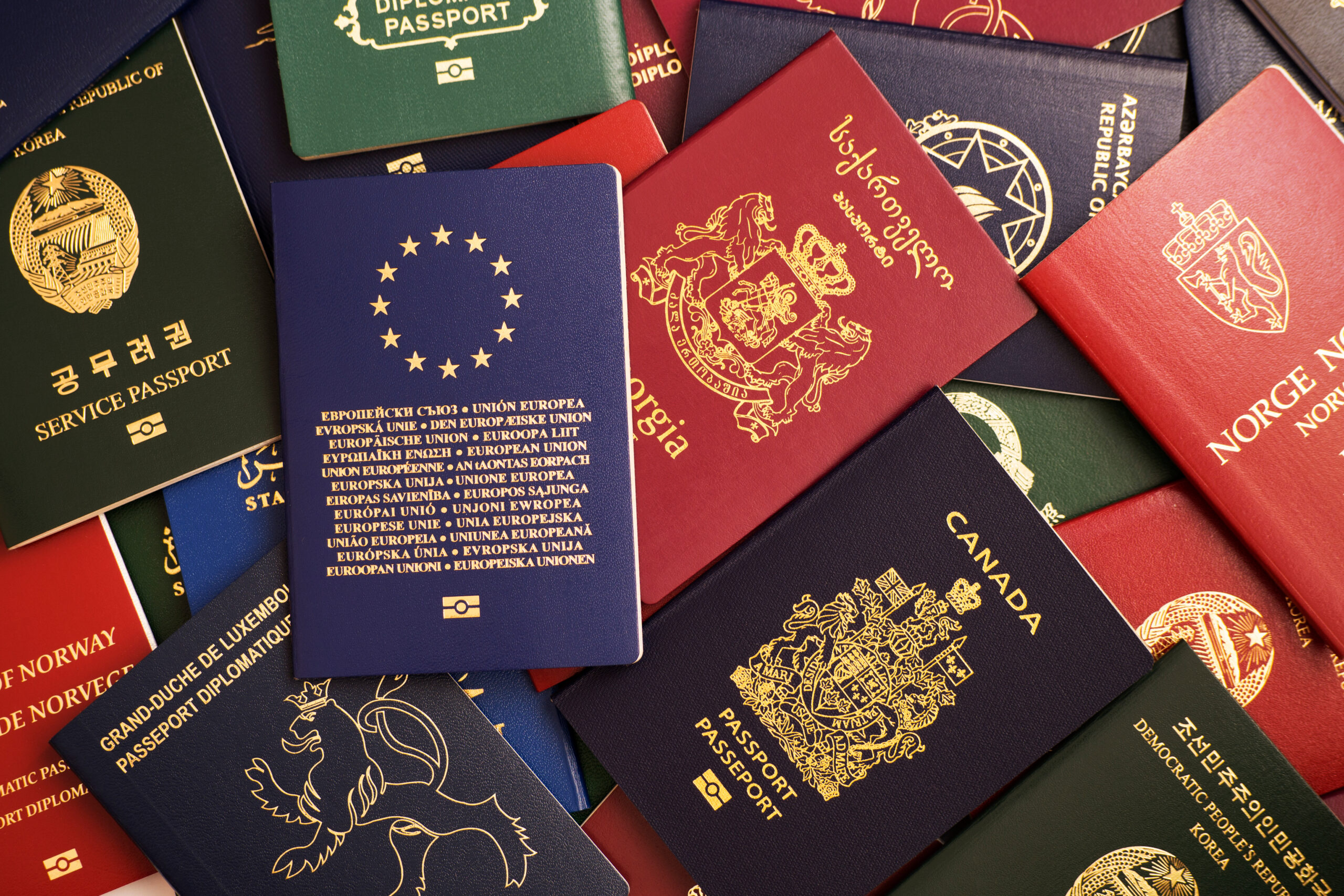
The Pacific island nation of Nauru announced its Economic and Climate Resilience Citizenship Program in November 2024 and began accepting applications in February 2025, making it possible to acquire citizenship through a contribution to a government fund. Following the revision in February 2026, the contribution is US$115,000 for a single applicant, discounted to US$90,000 for applications submitted by December 31, 2026. Including fees, a single applicant using the discount pays the government about US$102,700. There is no residence requirement, and a decision is said to come within 3 to 4 months of application. However, holders of the resulting passport need a visa for the EU, the UK, the US, Japan and Australia, and the UK imposed its visa requirement in December 2025 specifically because of this programme. The image of Nauru as a "tax-free country" is also not accurate: Nauru has had a tax on wages since 2014. And a Japanese national who acquires Nauruan citizenship automatically loses Japanese nationality. Based on information published by the Nauru government's programme office, the Nauru Revenue Office, Japan's Ministry of Foreign Affairs and Japan's Ministry of Justice, this article covers the costs, eligibility, process, the strength of the passport, taxes and the procedures on the Japanese side.
*Amounts and rules are as of October 12, 2026. This article is an English version of our Japanese guide, adapted for foreign residents of Japan and international investors. The total cost when applying through our office depends on your family composition, so please contact us.
Contents
- Summary: about US$100,000 for a single applicant and no residence requirement, but a limited passport and loss of Japanese nationality
- What kind of country is Nauru? 21 square kilometres and 12,000 people
- Costs: contribution and fees
- Eligibility: 18 or older, no criminal record, source of funds; age limits for dependants abolished
- Process and timeline: through an authorised agent, 3 to 4 months, mandatory interview
- Where the Nauru passport takes you: visas required for the EU, UK, US and Japan
- The reality of a "tax-free country": 20% tax on wages, but none if you neither live nor earn there
- For Japanese nationals: loss of Japanese nationality under Article 11 of the Nationality Act and subsequent procedures
- Frequently asked questions
- Summary points
Summary: about US$100,000 for a single applicant and no residence requirement, but a limited passport and loss of Japanese nationality
| Item | Details |
|---|---|
| Contribution (main applicant) | US$115,000. US$90,000 for applications submitted by December 31, 2026 |
| Contribution (additional) | US$2,000 per dependant aged 16 and over; US$15,000 per sibling |
| Main fees | Application fee US$5,000 (dependants US$2,000); due diligence US$6,000 (family members aged 16 and over US$3,000); bank screening and transfer fees from US$1,200; passport US$500 each |
| Government payments (single applicant) | About US$102,700 with the discount, about US$127,700 at the regular price, plus agent fees |
| Residence and visits | No requirement. If attending in person is difficult, the oath can be taken online or before a notary abroad |
| Processing time | Usually 3 to 4 months. An interview is mandatory for the main applicant |
| How to apply | Only through an authorised agent |
| Passport | Visa-free access to about 86 to 89 countries and territories. Visas required for the EU, the UK, the US, Japan, Australia and New Zealand |
| Tax | If you do not live in Nauru and have no income there, there is effectively no Nauru tax. No inheritance tax, capital gains tax or consumption tax |
| Dual citizenship | Permitted by Nauru. Japan does not permit it, so Japanese nationals lose Japanese nationality upon acquisition |
Nauruan citizenship is among the cheapest nationalities available through investment. However, the passport gives access to a limited number of countries and the programme's international standing is not yet settled, so it has limited practical value as a "second passport." For Japanese nationals, it is a programme to consider only on the premise of paying the price of losing Japanese nationality. For foreign residents of Japan, whether your current nationality is affected depends on the law of your own country.
What kind of country is Nauru? 21 square kilometres and 12,000 people
Nauru is an island nation just south of the equator, with an area of 21.1 square kilometres and a population of 11,947 (2024). It became independent in 1968 from a UN trusteeship administered by Australia and two other countries (Japan's Ministry of Foreign Affairs). The official languages are English and Nauruan, and the currency is the Australian dollar. Phosphate mining has left about 80% of the land unsuitable for habitation, and the deposits are nearly exhausted. About 60% of current government revenue comes from agreements with Australia to host refugees and migrants (the regional processing centre and third-country resettlement), and revenue from citizenship sales is positioned as funding for the Higher Ground Initiative, a plan to move about 90% of residents to higher ground inland in preparation for sea-level rise.
One Nauruan lives in Japan and no Japanese nationals live in Nauru, and Nauru has no embassy in Japan. Japan's ambassador to Fiji is concurrently accredited to Nauru. In May 2026, a constitutional amendment renaming the country the "Republic of Naoero" was passed by parliament, and the government formally announced it in July of the same year (no referendum was held). Japan's Ministry of Foreign Affairs basic data also gives the English name as Republic of Naoero. Citizenship certificates are issued under the new name, but passports will continue to say "Nauru" for the time being.
Nauru sold passports in the past, until the early 2000s. Due to money laundering concerns, it was placed on the FATF (Financial Action Task Force) list of non-cooperative countries in 2000 (until October 2005), and sales were halted in 2003 after it emerged that passports had been sold to individuals linked to al-Qaeda. The current programme was designed by Henley & Partners, a major citizenship-by-investment firm, and promotes its four-stage due diligence and interviews, but this history underlies the caution of other countries.
Costs: contribution and fees
The contribution to Nauru's fund (Naoero Treasury Fund) and the fees were fully revised on February 3, 2026. The current amounts are as follows (the official website lists the discounted US$90,000 and a "US$25,000 discount"; the regular price of US$115,000 is based on reporting by IMI Daily).
| Item | Amount |
|---|---|
| Contribution (main applicant) | US$115,000. US$90,000 (US$25,000 off) for applications submitted by December 31, 2026 |
| Contribution (dependants aged 16 and over) | US$2,000 per person |
| Contribution (siblings of the main applicant or spouse) | US$15,000 per person |
| Application fee | US$5,000 for the main applicant; US$2,000 per dependant |
| Due diligence | US$6,000 for the main applicant; US$3,000 per dependant aged 16 and over; US$3,000 for a funding provider |
| Bank screening and transfer fees | US$1,200 for a single applicant; US$1,700 with up to 3 dependants; US$2,200 with 4 or more |
| Passport issuance | US$500 each |
A single applicant using the discount pays US$90,000 + US$5,000 + US$6,000 + US$1,200 + US$500 = US$102,700; at the regular price, US$127,700. A family of a couple and two children aged 16 or over pays about US$125,700 with the discount and about US$150,700 at the regular price. On top of this come the authorised agent's fees and the cost of translating and authenticating documents in Japan.
Before the revision (2025), a single applicant paid about US$140,000, including a contribution of US$105,000, an application fee of US$25,000 and due diligence of US$10,000. These old fees are still found online. The figure of "about JPY 13.5 to 15 million" previously given in an earlier article on our Japanese site was also based on the old fees and the exchange rate at the time, and differs from the current level.
Eligibility: 18 or older, no criminal record, source of funds; age limits for dependants abolished
The main requirements for the main applicant are as follows (official programme website).
- Aged 18 or over
- Pass due diligence by an approved due diligence firm
- Police certificates from every country where you lived for more than 6 months in the past 10 years
- No conviction for an offence punishable by 12 months' imprisonment or more, and not under investigation or prosecution
- No involvement in terrorism, money laundering, crimes against humanity, etc., and not subject to UN or national sanctions
- Not a national of a country designated as high-risk by the UN Security Council
- Able to prove the source of the investment funds
- Oath of allegiance (in person in principle; if difficult, online or before a notary or similar official abroad)
Spouses, children, parents and siblings can apply together as dependants. The February 2026 revision abolished the age limits and financial dependency requirements for children and parents (programme office explanation; IMI Daily, February 3, 2026). Dependants aged 16 and over are subject to due diligence and may be interviewed if necessary. According to the programme office as of August 2025, applications are not accepted from nationals or residents of Iran, North Korea, Myanmar, Russia and Belarus (applicants from Afghanistan, Yemen and Sudan are accepted subject to conditions such as having lived abroad for 10 years or more), and there are no restrictions on Japanese nationals.
Process and timeline: through an authorised agent, 3 to 4 months, mandatory interview
- Consult an authorised agent: Under the official procedure, all applications are submitted by authorised agents. The official list includes 53 firms, but we could not identify any agent based in Japan
- Application and payment of fees: The agent submits the application form and documents, together with the application and due diligence fees
- Due diligence and interview: A firm commissioned by the programme office carries out background checks, and the main applicant must attend an interview (online or at a designated location). Due diligence usually takes 1 to 2 months
- Cabinet decision and approval in principle: After a risk assessment and a ministerial recommendation, the Cabinet decides. After approval in principle, you pay the contribution and the passport fee
- Oath, citizenship certificate and passport: After the oath of allegiance, the certificate is issued and you apply for a passport
The whole process is said to usually take 3 to 4 months. In the first approved case (a German family living in Dubai), it took about 3 months from acceptance on March 21, 2025 to approval in principle on June 17, and just over 4 months to the signing of the certificate on August 1. According to the Nauru government's 2026–27 budget papers, citizenship revenue in 2025–26 was AU$3.4 million (against a projection of AU$9 million), and the cumulative number of approvals has not been published.
Documents to prepare in Japan
You will need a criminal record certificate issued by the prefectural police headquarters as the police certificate; for Japanese nationals, a certified copy of the family register (koseki) with an English translation as proof of birth and marriage; English-language bank balance certificates and tax payment certificates as proof of the source of funds; and a certified copy of your passport, a CV and a medical certificate. Nauru is not a party to the Hague Apostille Convention and has no embassy in Japan, so you need to confirm with the agent before applying how authentication of Japanese public documents will be accepted. Our office handles the translation of documents and obtaining authentication from Japan's Ministry of Foreign Affairs.
Where the Nauru passport takes you: visas required for the EU, UK, US and Japan
When the programme was announced (November 2024, Henley & Partners), it was said to offer "visa-free access to 89 countries and territories," but the treatment by major countries is as follows.
| Destination | Status |
|---|---|
| Schengen Area (EU) | Visa required (Nauru has never been covered by the EU visa exemption) |
| United Kingdom | Visa required (since December 9, 2025; removed from visa-free and electronic travel authorisation eligibility because of its citizenship sales programme) |
| United States and Canada | Visa required |
| Japan | Visa required |
| Australia and New Zealand | Visa required |
| Hong Kong, Singapore and the UAE | Visa-free |
| Ireland | Visa required (since March 10, 2025) |
In December 2025, the UK's Parliamentary Under-Secretary for migration explained to Parliament that citizenship by investment is "inherently high-risk" and that there was insufficient confidence in Nauru's vetting, justifying the visa requirement. In the Henley Passport Index 2026, the Nauru passport ranks 52nd with 86 countries and territories. The Japanese passport ranks 2nd with 187, and a Nauru passport is no substitute for a Japanese passport.
The reality of a "tax-free country": 20% tax on wages, but none if you neither live nor earn there
Nauru has no comprehensive personal income tax, but since October 2014 it has had an Employment and Services Tax, levied on wages and fees for work performed in Nauru (Nauru Revenue Office).
| Category | Taxation |
|---|---|
| Residents (Nauruan citizens, etc.) | Tax-free up to about AU$110,800 a year; 20% on the excess |
| Non-residents | 20% from the first dollar (a AU$20,000 annual tax-free allowance applies only to direct contractors of the government) |
| Wages and fees earned outside Nauru | Not taxed (except those paid by Nauru residents or businesses) |
Business profits are subject to business tax (2016 Act); small-scale business income earned in Nauru by non-residents is taxed at 2.5% of gross income, and a 20% withholding tax applies to interest and royalties paid to non-residents. On the other hand, there is no capital gains tax, inheritance or gift tax, or VAT/consumption tax. Tax residents are defined as "Nauruan citizens, excluding those with a permanent home abroad," so someone who obtains citizenship while continuing to live in Japan is a non-resident for Nauru tax purposes.
In other words, to be precise, citizenship holders who neither live in Nauru nor earn income there effectively pay no Nauru tax. And as long as you continue to live in Japan, Japanese income tax, residence tax and inheritance tax continue to apply as before. Acquiring Nauruan nationality does not reduce your Japanese taxes. Japan's exit tax and the 10-year rule for inheritance tax when leaving Japan are explained in Taxes and resident registration when moving abroad (in Japanese).
For Japanese nationals: loss of Japanese nationality under Article 11 of the Nationality Act and subsequent procedures
Under Article 11, paragraph 1 of the Nationality Act, a Japanese national who acquires a foreign nationality of his or her own will loses Japanese nationality. Japan's Ministry of Justice explains that "if you naturalise in a foreign country, for example, you automatically lose Japanese nationality," and acquiring Nauruan citizenship falls under this rule. The fact that Nauru permits dual citizenship has no bearing on Japan's treatment.
- Notification of loss of nationality: File it with the municipal office or a Japanese embassy or consulate within 1 month of learning that you lost your nationality (3 months if you are abroad on that date) (Article 103 of the Family Register Act). You will need the original Nauruan citizenship certificate with a Japanese translation, and your passport
- Japanese passport: It becomes invalid when you lose your nationality
- If you continue living in Japan: You may stay in Japan for 60 days from the date of loss of nationality without a status of residence, but to remain beyond that you must apply within 30 days for a status of residence such as "Spouse or Child of Japanese National" or "Long-Term Resident" (Article 22-2 of the Immigration Control Act)
- Family register: You are removed from the family register and lose the rights of a Japanese national, such as the right to vote
If you apply together with your children as dependants, the children also lose Japanese nationality.
Frequently asked questions
How much does Nauruan citizenship cost?
For applications submitted by December 31, 2026, a single applicant pays about US$102,700 in total, including the US$90,000 contribution and fees; at the regular price, about US$127,700. Agent fees are extra.
Do I need to go to Nauru?
No. There is no residence or visit requirement, and if attending in person is difficult, the oath can be taken online or before a notary abroad. However, the main applicant must attend a due diligence interview.
Can I travel to the EU or the US with a Nauru passport?
No. The EU, the UK, the US, Canada, Japan and Australia all require visas. The UK imposed its visa requirement in December 2025 specifically because of this citizenship programme.
Is Nauru really tax-free?
Not exactly. Wages and fees earned in Nauru have been subject to a 20% Employment and Services Tax since 2014. However, people who neither live in Nauru nor earn income there effectively pay no Nauru tax. There is no inheritance tax, capital gains tax or consumption tax.
What happens to my Japanese nationality?
A Japanese national automatically loses Japanese nationality upon acquiring Nauruan citizenship. You must file a notification of loss of nationality, your Japanese passport becomes invalid, and you need a status of residence to continue living in Japan. If you hold another nationality, check whether your own country permits dual citizenship.
Who is Nauruan citizenship suitable for?
People who are prepared to give up Japanese nationality and want to hold a foreign nationality at the lowest possible cost. It is not suitable if your aim is to increase the number of countries you can visit or to hold another passport in addition to a Japanese one. In that case, consider countries where permanent residence is easy to obtain (in Japanese).
Summary points
- Nauruan citizenship can be obtained with a contribution of US$115,000 (US$90,000 for applications by December 2026) plus fees; a single applicant pays the government about US$102,700 to US$127,700
- There is no residence or visit requirement, and processing takes 3 to 4 months. An interview is mandatory for the main applicant, and applications can only be made through an authorised agent
- The passport gives visa-free access to about 86 to 89 countries and territories, such as Hong Kong, Singapore and the UAE; visas are required for the EU, the UK, the US, Japan and Australia
- "Tax-free country" is not accurate: wages earned in Nauru are taxed at 20%. Effectively no tax applies to those who neither live nor earn there
- Japanese nationals automatically lose Japanese nationality upon acquisition and must deal with the notification of loss, the invalidation of their passport and status of residence procedures
Our office offers consultations comparing citizenship programmes, including Nauru's, and permanent residence in various countries; translation and authentication of the Japanese documents needed for applications (family register, criminal record certificate, bank balance certificates, etc.); and application support. If you would like to work out whether a programme fits your goals, including consequences such as the loss of Japanese nationality, please use our free consultation. We never use pushy sales tactics. We can assist in English and Japanese.
- Free consultation form
- Phone: +81-3-6303-1664 (weekdays 9:00–20:00 Japan time)
- Email: info@royal-ptns.com
- Our services and consultation process (in Japanese)
Related articles: Vanuatu citizenship: costs and processing time / Dominica citizenship: costs, requirements and process / How much does permanent residence or citizenship abroad cost? (in Japanese) / List of countries that allow dual citizenship (in Japanese)
References (primary sources)
- Nauru citizenship programme: Contribution and fees
- Nauru citizenship programme: How to apply and eligibility
- Nauru citizenship programme: List of authorised agents
- Henley & Partners: Announcement of the Nauru citizenship programme (November 13, 2024)
- IMI Daily: Nauru cuts its fees (February 3, 2026)
- IMI Daily: First approved application (August 2025)
- ABC News: Nauru sells passports to fund climate action (August 7, 2025)
- IMI Daily: UK revokes Nauru's visa-free access (December 10, 2025)
- ILPA: Statement of changes to the UK Immigration Rules HC 1491 (December 9, 2025)
- Government of Nauru: 2026–27 budget papers
- Nauru Revenue Office: Employment and Services Tax Q&A (2024–25)
- Nauru Revenue Office: Business Tax Act Q&A
- NTL: Nauru's name change and the citizenship programme (2026)
- Wikipedia: Visa requirements for Nauruan citizens
- Ministry of Foreign Affairs of Japan: Republic of Nauru basic data
- Ministry of Justice of Japan: Nationality Q&A (acquiring a foreign nationality and loss of Japanese nationality)
- Immigration Services Agency of Japan: Application for permission to acquire status of residence
- ABC News: Nauru officially changes its name to Naoero (July 30, 2026)
- EY: Ireland introduces visa requirement for Nauruan nationals (March 2025)
- Embassy of Japan in the United States: Notification of loss of nationality
- Ministry of Foreign Affairs of Japan: Apostilles and official seal certification
- HCCH: Status table of the Apostille Convention
- Mitsubishi UFJ Research and Consulting: Exchange rates on October 9, 2026
Amounts and rules in this article are as of October 12, 2026.