Preparing for a Deposit Freeze in Japan: Asset Protection Options for Wealthy Individuals


There seem to be many wars around the world these days.
The war in Ukraine, the war involving Israel, a possible Taiwan contingency, a clash between NATO and Russia...
Japan carried out a deposit freeze in 1946, and lately there have been rumours that a deposit freeze could happen again.
As many people know, the tax office (National Tax Agency) is said to be able to freely view transactions in people's bank accounts.
If you hold your assets as cash and keep it in a bank account, a deposit freeze would mean your deposits being confiscated by the state.
There was also a theory that the switch to the new yen was aimed at flushing out "tansu yokin", cash kept at home rather than in the bank.
So, as a measure against a deposit freeze, I would like to consider how best to protect assets in forms other than deposits and cash.
*Amounts and figures are as of March 2025. This article is an English version of our Japanese guide, adapted for foreign residents of Japan and international investors.
Whose advice should you listen to?
Before getting into the main topic, let me first set out my view on a premise:
"Whose advice should you rely on when it comes to protecting your assets?"
I believe the answer is
"someone who holds substantial assets themselves, and who thinks about and acts on asset protection as their own personal concern."
To be honest, I do not personally hold enormous wealth, but an acquaintance of mine holds around JPY 2–4 billion, and we are in frequent contact, so I am in a position to learn first-hand how people in that wealth bracket think and what concerns them.
*I have known this person for more than seven years, and they have appeared in various media, so I can say with certainty that there is no chance they are a fraudster or a dubious character.
That background is why I write articles like this one.
I think it is only natural that "advice from people who do not hold substantial assets themselves is not convincing."
Because they do not know it from their own experience, they tend to recommend or push "products and services that benefit them when they sell them."
*In other words, position talk.
Now, let's get into the main topic.
Deposit freeze measure 1: physical precious metals
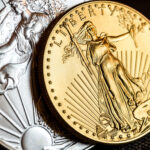
Precious metals such as gold and silver.
If you buy JPY 2 million or more in a single day, you are required to submit identification documents and the like under the Act on Prevention of Transfer of Criminal Proceeds.
However, purchases under JPY 2 million can be made without submitting identification documents.
Gold has recently hit an all-time high, while silver looks relatively cheap by comparison.
A one-ounce silver coin can be bought from around JPY 5,500–6,000, depending on the type.
I myself bought a total of 7 kg of physical silver (about JPY 1.3 million at the time) in March 2024.
*Buying too much also creates the problem of where to store it.
As of March 2025, some investors believe there is a high probability that the price of silver will triple or quadruple from here.

However, a large gain on sale carries the risk of heavy income tax
Related: Taking profits on physical gold: income tax, capital gains and the JPY 2 million payment report
Gains from selling gold bullion are subject to aggregate taxation, so they are added to business income, employment income and other income, and income tax is levied on the total.
If your annual income is high, the top rate including resident tax can reach about 55%.
*I explain this in more detail in the article above (in Japanese).
Deposit freeze measure 2: coloured gemstones (ruby, spinel, etc.)
Some investors consider coloured gemstones a very effective means of preserving assets.
Coloured gemstones range in price from several million yen to, at the high end, more than JPY 1 billion.
Diamonds and the like reportedly have hardly any value as assets, but depending on the type, such as ruby or spinel, some coloured gemstones are extremely rare and valuable, and there are stones whose price has risen 1.5 times in three years.
I sometimes receive various information from a person who actually plans to buy a coloured gemstone worth more than JPY 1 billion.
Another advantage is that they are very small, fitting in the palm of your hand, so they are easy to carry.
*A luxury wristwatch probably tops out at around JPY 100 million, so gemstones are even more portable than watches. They are also not as heavy as precious metals.
*If you would like to preserve assets with coloured gemstones, please contact me and I can make specific proposals.
Of course, I cannot guarantee that prices will rise, but there may be a higher chance of preserving value than by holding Japanese yen.
On which coloured gemstones have value, I think the following article is very useful.
Gendai Business:
Do you know how to tell "valuable gemstones" from "worthless gemstones"?
https://gendai.media/articles/-/59106
Deposit freeze measure 3: luxury wristwatches
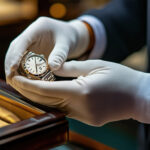
Wristwatches with high resale value also seem to have some use as a means of preserving assets.
In the watch world, Audemars Piguet, Vacheron Constantin and Patek Philippe are known as the "big three" watchmakers.
Some Richard Mille watches cost from tens of millions of yen up to around JPY 100 million.
Rolex and others also perform well in terms of resale value.
Some luxury cars also have high resale value, but cars are larger than watches and need space for storage.
Cars also involve garage registration and the like, so there seems to be a risk of their being confiscated in the form of a property tax.
However, watches with good resale value are hard to buy at the list price.
You need to think about which models are popular and, conversely, which are unpopular.
For Rolex, stainless steel models tend to have higher resale value than two-tone models that use gold.
There is also an opinion among watch enthusiasts that "models with diamonds do not have intrinsic value matching their price, so it is better not to buy them."
Antique pieces require more specialist knowledge than new ones, so for beginners buying a recent new model is probably the safer choice.
*There is also the risk of being sold a fake.
However, watches range from several million yen to around JPY 100 million, so they may not be well suited to preserving larger amounts of assets.
Yusaku Maezawa was reportedly suspected of smuggling when he tried to bring a Richard Mille worth about JPY 100 million into Russia in a box.
Yusaku Maezawa's JPY 100 million wristwatch confiscated by Russian customs https://www.rolesoku.tokyo/archives/12892087.html
However, luxury watches are not the best way to protect assets
With luxury watches, the risk of being sold a fake is high and it is relatively difficult to verify authenticity, so I do not think they are the best measure for protecting assets. I explain this in more detail in the following article (in Japanese).
Related: Why luxury watches are not suitable for asset protection
Deposit freeze measure 4: cryptocurrency (crypto assets)
Compared with the confiscation of bank deposits, the confiscation of cryptocurrency (crypto assets) might be legally put off until later.
Holding cryptocurrencies whose demand looks likely to remain solid in the future, such as Bitcoin (BTC) or Ripple (XRP), may be one option.
Ripple (XRP) and Stellar Lumens (XLM) are also attracting attention as potentially very useful means of international remittance, and their presence may grow in the future.
However, there have been incidents in which crypto assets kept in cold wallets were still stolen by hackers, so in terms of safety, physical assets may have the edge.

Could stocks, bonds, ETFs and mortgaged real estate also be confiscated by the government?
This is a slightly different topic from a deposit freeze, but recently there have also been rumours of a reset of the economic system known as the "Great Reset".
If this were actually to happen, real estate held in the names of individuals or domestic companies might be confiscated by the government.
*This is also referred to as the "Great Taking".
It may be time to review which country you hold your assets in and in what form, taking into account your own values and life plans.
Even if a deposit freeze never happens, Japan is a high-tax country to begin with.
I think managing assets abroad can also be effective, both for its tax advantages and as protection against a property tax or deposit freeze.
*If you move your base of life abroad, issues such as non-resident status and Japan's exit tax also come into play.
What other physical assets could be used to protect wealth?
Physical assets that can never be produced again tend to gain value.
For example, some people collect physical assets such as:
- Dinosaur fossils
- Antiques
- Works of art
- Paintings
However, these require a storage place with a fair amount of space, and because they are high-value assets, security measures are also needed.
Summary: which assets are best for protection against a deposit freeze?
As we have seen, for preserving assets against a deposit freeze, physical assets are better than paper assets.
You need to convert cash into assets while also taking into account the low cost of continuing to hold them and their safety.
What do you think?